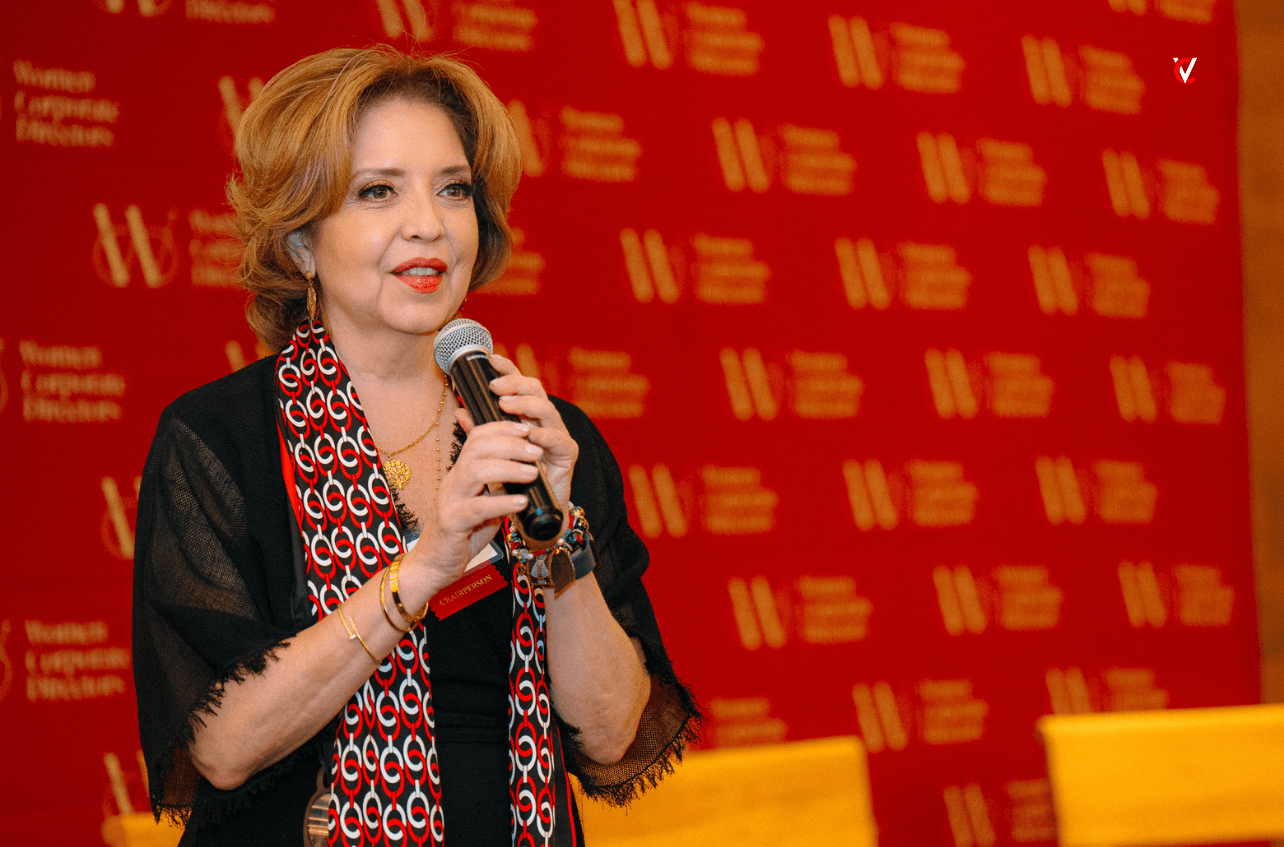
In today’s rapidly evolving global economy, organizations face unprecedented levels of complexity. Digital transformation, geopolitical volatility, regulatory expansion, and rising stakeholder expectations have elevated governance and risk management from supporting functions to strategic imperatives. At the forefront of this transformation stands Monica Loaiza Mateos, a seasoned governance leader whose career spans more than three decades across finance, banking, and enterprise risk leadership.
As Chief Audit Executive, Monica represents a new generation of governance leaders who see audit not simply as an oversight mechanism, but as a strategic capability that strengthens institutional trust and long-term resilience. Her journey from technical financial expert to enterprise governance strategist reflects the broader evolution taking place within modern organizations.
A Career Shaped by Strategic Transitions
Monica’s professional foundation was built on technical precision. Early in her career within the banking sector, her responsibilities focused heavily on financial controls, regulatory frameworks, and risk methodologies. Success was defined by compliance accuracy and meticulous attention to operational detail. However, as her leadership responsibilities expanded, so did her perspective.
A defining transition occurred when she began leading multidisciplinary audit and risk teams. The role required her to look beyond the mechanics of controls and toward the broader strategic context in which organizations operate. Instead of simply evaluating whether systems functioned properly, Monica began asking deeper questions: Do these controls support the organization’s strategic objectives? Are they preparing the enterprise for future risk landscapes?
This shift transformed her understanding of governance. Audit was no longer just retrospective verification. It became a forward-looking discipline designed to anticipate emerging challenges.
Another critical evolution came through her engagement with corporate boards and audit committees. Boardroom discussions require leaders who can synthesize complex risk environments into strategic insights that guide decision-making. Monica developed the ability to translate intricate regulatory, financial, and operational risks into actionable perspectives for leadership teams.
Her experience serving as an independent director further broadened her governance outlook. From that vantage point, she recognized that governance extends far beyond formal frameworks and control structures.
True governance, she believes, is a living ecosystem composed of strategy, incentives, culture, and accountability. Over time, this evolution reshaped her professional identity from a technical expert focused on compliance ith a strategist dedicated to safeguarding enterprise integrity.
Redefining the Role of Internal Audit
Within complex institutions such as large retail and financial organizations, internal audits must evolve to remain relevant. Monica strongly believes that audit functions focused exclusively on historical review risk becoming obsolete. Instead, modern internal audits must anticipate risk before it becomes visible to regulators, markets, or customers.
Under her leadership, internal audits have been intentionally repositioned as a strategic partner to business leadership. This transformation is driven by three core principles.
First is dynamic risk assessment. Rather than relying solely on annual planning cycles, her teams continuously monitor emerging threats, including cybersecurity vulnerabilities, regulatory developments, data governance issues, and shifts in consumer behavior. This dynamic approach ensures that audit priorities evolve alongside business strategy.
Second is the use of advanced data analytics. Modern organizations generate vast volumes of operational data, and Monica’s audit philosophy embraces technology to analyze these datasets. By identifying patterns and anomalies early, analytics enable auditors to detect vulnerabilities long before traditional sampling methods uncover them.
Third is the cultivation of business fluency within audit teams. Monica emphasizes that auditors must deeply understand the strategic priorities of the organization they support. When audit insights align with business objectives, they contribute directly to performance, innovation, and resilience.
The success of this philosophy is often reflected in a subtle but powerful indicator: when management proactively seeks the audit function’s perspective before launching major initiatives. This signals trust and confirms that audit is contributing to forward-looking decision-making.
Navigating Multidimensional Risk
Retail and financial ecosystems operate within intricate networks of operational, technological, and regulatory exposure. Strategic initiatives, particularly digital expansion, frequently introduce new layers of operational risk.
Monica approaches this complexity through an integrated risk framework built around three critical dimensions: impact, velocity, and interconnectedness.
High-impact risks that could affect the enterprise systemically receive direct board- level visibility, while operational vulnerabilities are monitored through continuous control testing and advanced analytics.
Her approach recognizes that strategic decisions rarely exist in isolation. A major digital initiative, for instance, may trigger downstream exposures in cybersecurity, data privacy, and third-party risk management.
For Monica, effective risk leadership requires maintaining dual vision: a strategic horizon that anticipates enterprise-level threats and an operational lens that ensures foundational discipline remains strong.
Building a Culture of Accountability
While governance frameworks are essential, Monica emphasizes that culture ultimately determines their effectiveness. Policies may define expectations, but behaviors across an organization are shaped by leadership examples and everyday decisions.
Embedding accountability begins with tone at the top, yet it must extend throughout the organizational hierarchy. Middle management plays a critical role in translating ethical principles into operational reality.
Monica advocates for governance environments that include clear decision rights, transparent escalation mechanisms, and consistent consequence management. Equally important is the creation of psychological safety, where employees feel empowered to raise concerns without fear of retaliation.
In organizations with strong integrity cultures, escalation is not viewed as disloyalty but rather as responsible for stewardship. Compensation structures also play a decisive role. Incentive systems that reward short-term results without accounting for risk discipline can erode ethical standards over time.
Governance in an Era of Interconnected Risks
The modern risk landscape is increasingly shaped by interconnected global forces. Cybersecurity threats, geopolitical tensions, regulatory complexity, and reputational exposure often converge simultaneously.
Monica notes that executive teams frequently underestimate the compounded impact of these overlapping disruptions. For example, a cybersecurity breach is no longer merely a technical event. It can rapidly evolve into a reputational crisis affecting consumer trust, investor confidence, and market valuation.
Similarly, geopolitical volatility can disrupt supply chains, currency stability, and regulatory alignment at once. To navigate these realities, organizations must adopt scenario planning models that consider interconnected shocks rather than evaluating risks in isolation.
Governance That Scales with Growth
Rapid organizational expansion presents another governance challenge. Monica frequently observes that strategy often scales faster than the governance frameworks designed to support it.
Companies may aggressively pursue digital transformation or geographic expansion while underestimating the infrastructure required to manage the resulting complexity.
Robust governance architecture, including strong control frameworks, data governance systems, and risk oversight mechanisms, must evolve alongside strategic growth.
Third-party relationships represent a particularly underestimated risk category. Modern organizations rely heavily on fintech partners, outsourced service providers, and global supply chains. These dependencies must be fully integrated into enterprise risk management frameworks to ensure resilience.
The Strategic Power of Board Diversity
Beyond operational governance, Monica is an advocate for stronger diversity within corporate boards. Through her engagement with governance forums and professional organizations, she has witnessed firsthand how diverse boards produce more balanced decision-making.
Different professional backgrounds, international perspectives, and gender diversity help challenge groupthink and uncover blind spots that homogeneous boards may overlook. For Monica, diversity is not symbolic. It is strategic. Diverse boards improve risk assessment, strengthen stakeholder alignment, and enhance long-term sustainability.
Safeguarding the Future of Enterprise Governance
Looking ahead to the next decade, Monica believes organizations must fundamentally rethink how governance integrates strategy and risk management. Traditional silos separating compliance, risk, and strategic planning are no longer sustainable. Instead, these disciplines must operate as interconnected components of enterprise decision-making. Companies will also need to invest heavily in digital risk capabilities, including cybersecurity resilience, data governance frameworks, and oversight mechanisms for emerging technologies such as artificial intelligence. Equally important is the continuous education of corporate boards. Directors must develop deeper fluency in technological disruption, sustainability challenges, and geopolitical shifts.
Organizations that embrace governance as a strategic capability, not merely a compliance obligation, will be best positioned to navigate the uncertainties ahead.
A Leadership Philosophy Anchored in Trust
Throughout her career, Monica has championed a vision of governance rooted in accountability, foresight, and integrity. In an era defined by acceleration and volatility, her philosophy reflects a powerful truth: trust is the most asset any organization possesses. Through her leadership, Monica continues to demonstrate that governance is not a constraint on innovation, but rather the foundation upon which resilient, trustworthy enterprises are built.
Leadership Lessons for the Next Generation
As someone who has influenced governance at both executive and board levels, Monica offers clear guidance for emerging professionals aspiring to shape enterprise leadership.
Technical excellence remains the starting point, as credibility within finance and audit disciplines depends on deep expertise. However, long-term influence requires additional capabilities: strategic thinking, communication skills, and the ability to synthesize complex issues into clear insights for leadership audiences. Above all, Monica emphasizes the importance of personal integrity.
Reputation accumulates gradually over time through consistent ethical decision-making.
Related Blogs : Articles/Press Release : Shaping the Future of Business and Technology