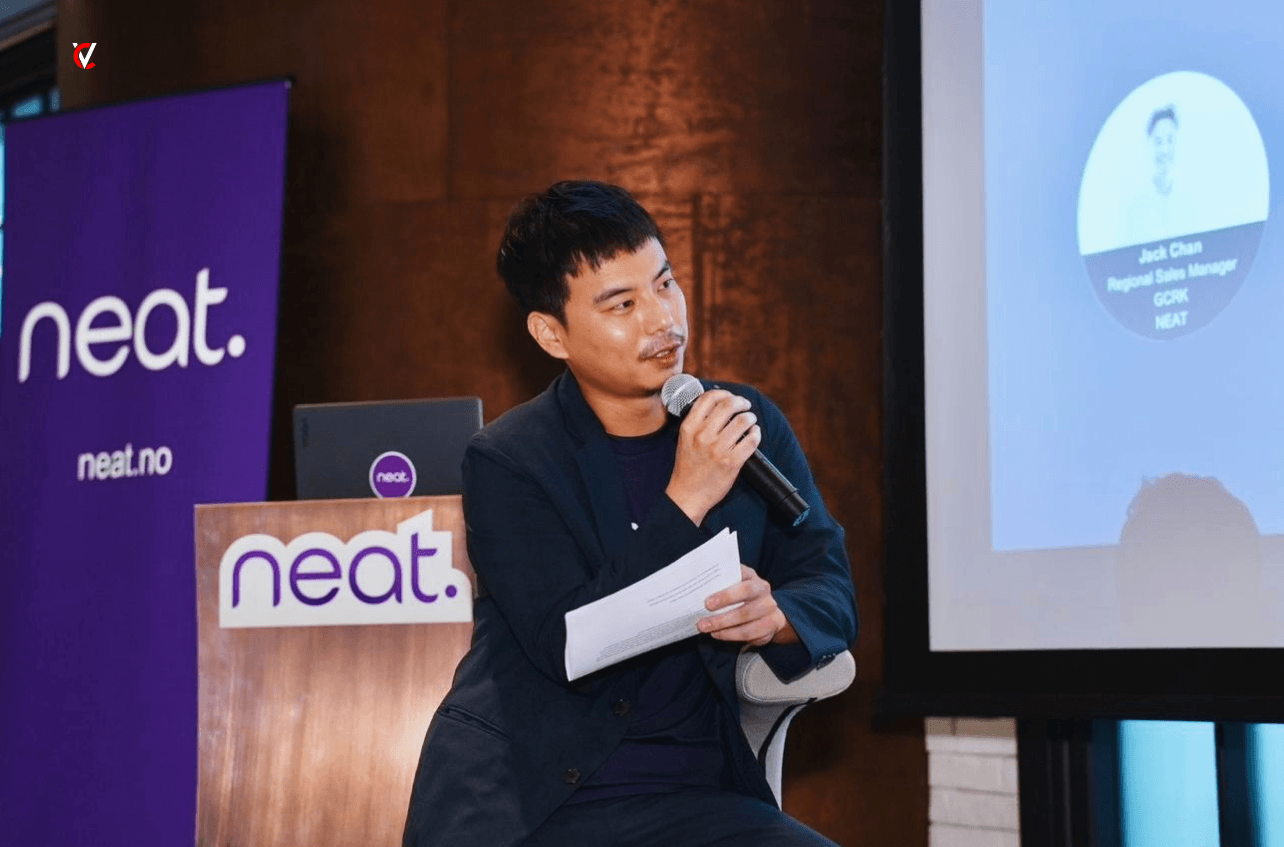
In an age where the definition of the workplace is rapidly evolving, the convergence of technology and real estate has become a defining force in shaping the future of business environments. Among the leaders driving this transformation is Jack Chan, a forward-thinking professional who is redefining how organizations across Asia-Pacific approach workplace design, collaboration, and value creation.
With a strong foundation in enterprise technology and a deep understanding of human-centric innovation, Jack Chan is helping businesses transition from static office models to dynamic, performance-driven ecosystems. Through his work with Neat, he is enabling organizations to unlock the true potential of their real estate by integrating seamless collaboration technologies that enhance both user experience and operational efficiency.
A Journey Built on Purpose and Insight
Jack’s professional journey began in the enterprise technology space, where he worked closely with organizations across the Asia-Pacific region. Early in his career, he observed a recurring challenge: despite having access to advanced tools, many businesses struggled to create effective collaboration experiences.
Rather than enabling productivity, technology often introduced friction. Meeting rooms, in particular, became one of the most underutilized spaces within offices. Complex systems, inconsistent setups, and lack of user-friendly interfaces led to poor adoption rates.
This insight became a turning point. Jack recognized that the issue was not the availability of technology, but the way it was designed and experienced by users. Driven by the belief that technology should simplify interaction, not complicate it, he began focusing on creating intuitive and seamless workplace solutions. His academic background from Griffith University and professional exposure in global hubs like Hong Kong further shaped his understanding of workplace dynamics in high-performance markets.
Bridging Technology and Real Estate
Across Asia-Pacific, the role of real estate is undergoing a profound transformation. Traditionally viewed as a physical asset, office space is now being redefined as a strategic environment that directly impacts business performance.
Jack has been at the forefront of this shift, helping organizations understand that workplace technology plays a critical role in determining how effectively a space functions. Collaboration areas, often among the most expensive components of commercial real estate, frequently remain underutilized due to poor technology integration. When meeting experiences are inconsistent or difficult, employees tend to avoid these spaces altogether.
By introducing simplified and reliable collaboration solutions, Jack is helping businesses convert these underperforming areas into high-value assets. This not only improves employee experience but also enhances overall real estate efficiency.
The Shift Toward Experience-Driven Workspaces
One of the most significant changes in modern real estate is the growing emphasis on workplace experience. Today’s tenants are no longer evaluating office spaces based solely on location or cost. Instead, they are prioritizing environments that support hybrid work, foster collaboration, and enhance productivity.
Jack highlights that offices must now offer a compelling reason for employees to return. This means creating spaces that are not only functional but also engaging and intuitive. Buildings that deliver superior workplace experiences benefit from:
- Higher tenant satisfaction
- Increased retention rates
- Stronger long-term asset value
In this new landscape, technology is no longer an optional enhancement it is a fundamental driver of real estate success.
Designing Spaces Around Human Behavior
Another key trend shaping the industry is the shift from traditional design approaches to experience-first strategies. In the past, spaces were designed first, and technology was added later. Today, organizations are reversing this approach by designing environments around how people actually work and collaborate.
Jack emphasizes the importance of:
- Creating equitable experiences for both remote and in-office participants.
- Designing flexible layouts that adapt to multiple use cases.
- Ensuring consistency across all meeting spaces.
This shift allows organizations to maximize the value of every square meter while delivering a seamless user experience.
By aligning physical design with digital functionality, Jack is helping redefine how workplaces are conceptualized and utilized.
The Role of Data in Modern Real Estate
The integration of SaaS and IoT technologies is transforming buildings into intelligent ecosystems. These technologies provide real-time insights into:
- Space utilization
- Occupancy patterns
- Environmental conditions
Jack believes that data is becoming a critical component of workplace strategy. It enables organizations to make informed decisions, optimize space usage, and continuously improve performance.
Rather than relying on assumptions, businesses can now adopt a data-driven approach to real estate management leading to greater efficiency and better outcomes.
Smart Offices in High-Density Cities
In cities like Hong Kong and Singapore, where space is limited and costs are high, efficiency is essential. Jack notes that organizations in these markets are under increasing pressure to ensure that every square meter delivers value.
This has led to the rapid adoption of:
- Hybrid collaboration tools
- Flexible workspace designs
- Data-driven workplace strategies
In such environments, even small improvements in space utilization can have a significant impact on overall performance. Jack’s work is helping organizations in these regions create smarter, more efficient workplaces that align with evolving business needs.
The Future of Real Estate: Intelligent and Adaptive Spaces
Looking ahead, Jack envisions a future where buildings are not just smart, but truly intelligent. Artificial intelligence will play a key role in this transformation, enabling:
- Predictive workplace environments
- Automated optimization of space usage
- More immersive and natural collaboration experiences
These advancements will allow buildings to adapt in real time, creating environments that respond to the needs of their users.
For Jack, the future of real estate lies in creating spaces that are intuitive, flexible, and capable of evolving alongside changing work patterns.
Driving Innovation with Simplicity
At Neat, Jack continues to focus on simplifying workplace collaboration while integrating intelligent features into modern workspaces. His approach is centered on creating solutions that are intuitive, efficient, and seamlessly integrated into everyday workflows. Rather than adding complexity, his vision is to make technology effortless ensuring that it enhances, rather than disrupts, the way people work.
Jack represents a new generation of leaders redefining the relationship between workplace technology and real estate. By prioritizing human experience, leveraging data, and embracing simplicity, he is helping organizations unlock the full potential of their spaces.
As the real estate industry continues to evolve, his insights provide a clear roadmap for the future one where offices are not just places to work, but powerful platforms for collaboration, innovation, and growth.
Related Blogs : Articles/Press Release : Shaping the Future of Business and Technology