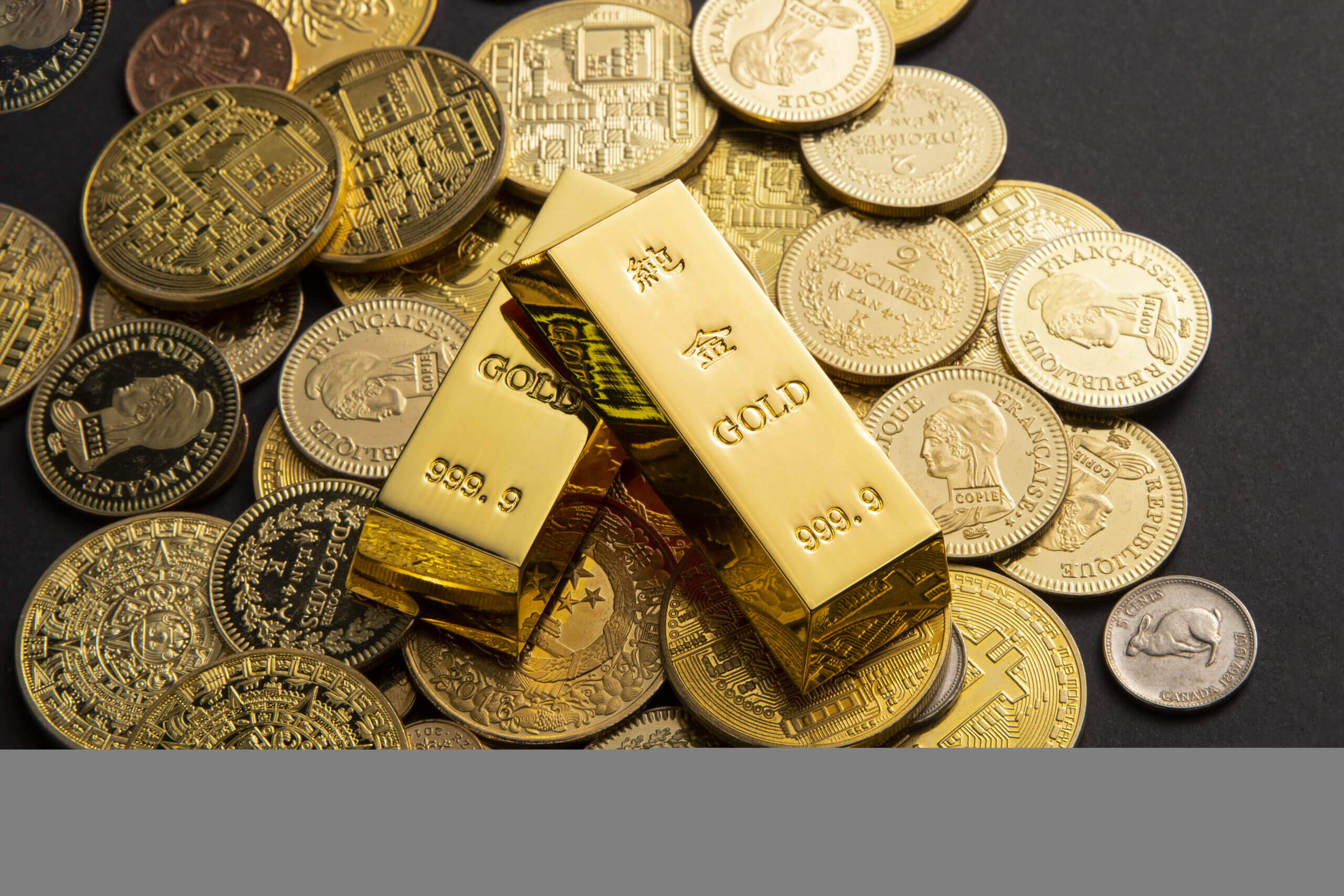
The ascent of gold beyond the $4,400-per-ounce mark, accompanied by silver’s surge to historic highs, represents a defining inflection point in global financial markets. This movement cannot be understood through the lens of traditional commodity cycles or short-term speculative enthusiasm. Instead, it reflects a deeper recalibration of value, trust, and risk across the global financial system one that has been years in the making and is now accelerating rapidly.
At its core, this rally signals a structural repricing of monetary confidence. The post-global-financial-crisis model built on ever-expanding debt, persistent monetary accommodation, and faith in central bank omnipotence is reaching its functional limits. Governments are confronting historically high debt loads, fiscal deficits are becoming politically entrenched rather than cyclical, and policy tools that once stabilized markets now produce diminishing marginal returns. In this environment, gold and silver are no longer viewed merely as defensive hedges; they are being re-embraced as foundational monetary assets in an increasingly unstable financial architecture.
For the first time in decades, precious metals are not responding solely to acute crises such as recessions, banking failures, or geopolitical shocks. Instead, they are reacting to a sustained reconfiguration of how global capital interprets stability, sovereignty, and systemic resilience. Investors are no longer asking when the next crisis will arrive; they are positioning for a world in which uncertainty itself has become structural.
The End of the “Predictable Policy Era”
For much of the post-2008 period, global markets operated under an implicit but powerful assumption: central banks would always intervene decisively, swiftly, and at scale to prevent systemic disruption. Ultra-low interest rates, quantitative easing, emergency liquidity facilities, and implicit guarantees created a perception of predictability in an otherwise volatile world. Risk assets flourished under the belief that policy makers would remain perpetually ahead of the curve.
That assumption is now eroding. Inflation has re-emerged not as a transient anomaly, but as a structural feature shaped by supply-chain realignments, demographic pressures, energy transitions, and geopolitical fragmentation. At the same time, political polarization and fiscal constraints are narrowing the operational independence of central banks. Policy decisions are increasingly contested, delayed, or diluted, undermining the credibility of forward guidance that once anchored market expectations.
While markets are pricing in U.S. Federal Reserve rate cuts, the deeper concern is not the direction of rates, but the effectiveness of monetary policy itself. Investors are beginning to question whether traditional tools interest rate adjustments and balance-sheet expansion can meaningfully stabilize growth without introducing new systemic risks. This uncertainty weakens confidence in fiat monetary systems and strengthens the appeal of assets that exist outside the policy framework.
Gold thrives precisely at this inflection point. It performs best not when policy paths are clear and confidence is high, but when the long-term consequences of intervention become opaque. As real yields compress and trust in central bank foresight diminishes, gold reasserts its role as a monetary constant immune to policy missteps, political pressures, and institutional credibility cycles.
Silver, while sharing these monetary characteristics, absorbs additional volatility from the real economy. Its dual exposure makes its price movements sharper and more erratic, but also more diagnostically valuable. Silver’s behavior increasingly reflects not only monetary stress, but the health and direction of the global industrial system itself.
Real Yields, Currency Fragility, and the Quiet Decline of the Dollar’s Dominance
At the core of the precious metals rally lies the persistent erosion of real returns within fiat-based financial systems. Even incremental rate cuts, when layered on top of structurally elevated inflation expectations, compress real yields and steadily erode purchasing power. For long-term investors, pension funds, sovereign institutions, and reserve managers, this is not a temporary inconvenience it represents a strategic threat to capital preservation.
The U.S. dollar remains the dominant reserve currency, but its uncontested supremacy is quietly eroding. Trade settlement diversification, bilateral currency agreements, regional payment systems, and alternative clearing mechanisms are gaining traction particularly among emerging markets and geopolitically non-aligned economies seeking to reduce exposure to financial coercion and sanctions risk.
Gold benefits directly from this transition. As a neutral, non-sovereign asset, it carries no counterparty risk, no political alignment, and no dependency on any single financial system. This neutrality is no longer theoretical it has become operationally valuable. Central banks increasingly view gold as a strategic hedge against currency volatility, financial sanctions, and systemic fragmentation.
As official-sector accumulation accelerates, gold’s price dynamics change fundamentally. Demand becomes less price-sensitive and more strategic, introducing a durable floor beneath valuations and reducing downside volatility. This shift marks a transition from cyclical demand patterns to structural allocation behavior.
Central Banks as Structural Buyers, Not Tactical Players
One of the most consequential yet underappreciated forces behind the current rally is the transformation in central bank behavior. Unlike hedge funds or speculative investors, central banks do not trade narratives or momentum. Their actions are governed by long-term balance-sheet resilience, national security considerations, and intergenerational financial stability.
In recent years, central banks particularly across Asia, the Middle East, and Eastern Europe have steadily increased gold holdings as part of a broader strategy to diversify reserves away from single-currency exposure. These purchases are not motivated by price appreciation, but by strategic autonomy and risk mitigation.
Crucially, when central banks accumulate gold, they rarely reverse course. This introduces permanence into demand dynamics. At the same time, global mine supply growth remains constrained by declining ore grades, rising environmental regulations, and escalating capital costs. The interaction of sticky demand and constrained supply fundamentally reshapes the gold market’s long-term equilibrium. Gold is no longer simply a hedge against inflation or crisis it is increasingly embedded into the architecture of sovereign financial resilience.
Silver’s Dual Identity: Monetary Hedge Meets Industrial Backbone
Silver’s resurgence warrants distinct and deeper consideration. Historically treated as gold’s more volatile counterpart, silver is now reasserting itself as one of the most strategically important materials in the modern economy.
On the monetary front, silver mirrors gold’s appeal as a hedge against currency debasement, declining real yields, and policy uncertainty. However, silver’s industrial dimension introduces an additional structural demand driver absent in gold.
Silver is indispensable to solar photovoltaics, electric vehicles, advanced electronics, medical technologies, and high-performance computing infrastructure. As governments accelerate energy transitions and industries scale electrification and digitalization, silver demand becomes increasingly non-discretionary. Unlike cyclical commodities, silver cannot be easily substituted without compromising performance or efficiency.
This creates a rare convergence: accelerating investment demand colliding with expanding industrial consumption and limited supply elasticity. The result is heightened price sensitivity and amplified volatility but also long-term structural upside. Silver’s movements are increasingly signaling both monetary stress and industrial transformation simultaneously.
Geopolitics, Fragmentation, and the Return of Hard Assets
Beyond monetary considerations, geopolitics is exerting a profound influence on precious metals markets. The global economy is fragmenting into competing economic and political blocs, supply chains are being re-regionalized, and economic policy is increasingly framed through the lens of national security.
In this environment, financial assets embedded within specific jurisdictions carry elevated political and regulatory risk. Capital controls, sanctions, asset freezes, and payment restrictions are no longer theoretical they are active policy instruments. Gold and silver, by contrast, exist outside national systems. They cannot be digitally restricted, politically weaponized, or jurisdictionally neutralized.
This characteristic has renewed their relevance as instruments of strategic autonomy. For states, institutions, and high-net-worth investors alike, hard assets provide insulation against the politicization of finance. Their resurgence reflects not nostalgia, but adaptation to a fragmented global order.
A Signal of Deeper Economic Transition
The surge in gold and silver prices is not a forecast of imminent recession. Instead, it reflects uncertainty surrounding the architecture of the next economic regime. Investors are increasingly less focused on quarterly growth metrics and more concerned with long-term capital durability in a world where volatility is persistent rather than episodic.
Equity markets may continue to reward innovation, and digital assets may explore alternative value systems, but precious metals are quietly reclaiming their foundational role. They represent trust that does not depend on algorithms, policy promises, or institutional credibility.
A Repricing of Trust, Not Just Metals
Gold crossing $4,400 per ounce and silver reaching record highs are symbolic milestones but they are not the endgame. They are indicators of a broader reassessment underway across global capital markets, one that questions long-held assumptions about money, policy, and stability.
This rally is not driven by fear alone. It is driven by foresight, strategic reallocation, and a recognition that trust is becoming scarcer than liquidity. In a world where money can be created instantly, but credibility cannot, gold and silver are being repriced not for what they promise but for what they inherently represent.
Related Blogs : https://ciovisionaries.com/articles-press-release/