T-Mobile’s decision to open its satellite-powered 911 text service to all U.S. wireless users marks one of the most significant advancements in telecommunications safety infrastructure in decades. Beyond being a network upgrade, the move reshapes expectations of what emergency communication should look like in a digitally dependent society. By leveraging the power of Starlink’s low-Earth-orbit (LEO) satellites and removing carrier restrictions, T-Mobile is creating a new standard: emergency access that is universal, resilient, and independent of traditional cell tower limitations.
The Historical Shift: From Tower-Based Networks to Satellite-Backed Safety
For most of the mobile era, emergency communication has depended almost entirely on ground-based infrastructure. Cellular towers, fiber backbones, and regional switching centers have formed the backbone of 911 access. While this architecture worked well in urban and suburban areas, it consistently failed large swaths of the country where building towers was not cost-effective.
Satellite-supported emergency communication represents the biggest leap in this system since the national rollout of Enhanced 911 (E911) in the early 2000s. E911 improved location tracking, but it still relied on terrestrial networks. T-Mobile’s initiative breaks that dependency. It introduces a second, independent layer of safety that operates even when the first layer collapses whether due to distance, weather disasters, wildfires, hurricanes, or infrastructure failures.
This shift aligns with broader technological trends where the boundaries between space and ground communication are rapidly dissolving. Satellite networks are no longer exotic, niche technologies they are becoming part of everyday connectivity.
Why This Matters for National Safety and Disaster Resilience
Every year, emergency responders encounter life-or-death situations where individuals cannot reach 911 due to lack of coverage. Incidents involving stranded hikers, avalanche victims, motorists in remote deserts, or residents isolated by natural disasters often highlight gaps in traditional networks.
The U.S. also faces more frequent climate-related emergencies wildfires in the West, hurricanes in the Gulf and East Coast, power grid failures, and severe winter storms. These events commonly knock out terrestrial networks, leaving millions temporarily disconnected. Satellite-based emergency texting fills this vulnerability by acting as a fallback channel that does not rely on ground infrastructure.
T-Mobile’s move fundamentally enhances the country’s resilience. Emergency communication can now persist even when entire regions suffer outages. For search and rescue teams, this can dramatically reduce response times. Every minute saved increases survival rates in medical emergencies, stranded situations, and environmental crises.
How the Satellite 911 System Works: A Deeper Technical Look
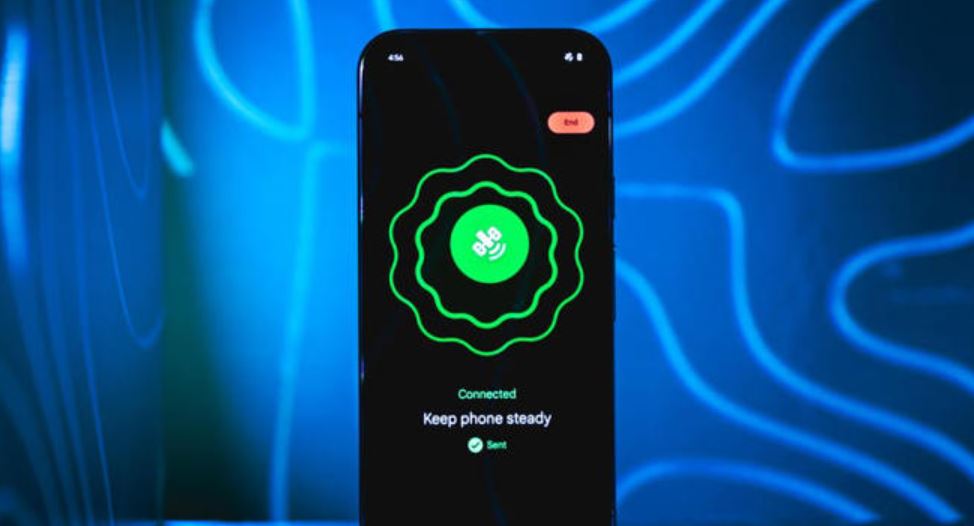
The T-Mobile satellite texting system operates by creating an intelligent failover mechanism in the device’s communication stack. When a phone cannot detect a usable cellular signal, it automatically activates the satellite communication protocol. The device then establishes a link with a passing Starlink satellite located hundreds of kilometers above Earth. This link is temporary and moves as the satellite travels, meaning the device must maintain alignment for a few seconds to send the message.
Starlink’s LEO design is central to the system’s utility. Unlike older geostationary satellites located 35,000 km above Earth, LEO satellites orbit at roughly 500–600 km, significantly reducing latency and improving signal strength for small mobile antennas. This allows ordinary smartphones not specialized satellite phones to communicate with space-based networks.
Once text messages are transmitted, the satellite routes them down to Starlink ground stations, which then pass them into the National Emergency Services IP network. The system ensures messages reach the correct regional Public Safety Answering Point (PSAP), where human dispatchers or automated systems can respond accordingly. This hybrid satellite-ground chain represents a new model of emergency communication that blends space technology with traditional infrastructure.
Device Compatibility: A Bridge Between Old and Next-Gen Mobile Connectivity
Device compatibility depends on whether phones support the necessary baseband modem and firmware that enable satellite link negotiation. Older and mid-range phones that lack native satellite support can still access emergency satellite texting through T-Mobile’s T-Satellite layer if enrolled.
Interestingly, many high-end models like iPhone 14 and later use their own proprietary emergency satellite systems. Apple introduced Emergency SOS via Satellite in 2022, giving its users a separate direct-to-satellite safety channel. Google followed with satellite capabilities in the Pixel 9 series. These systems do not conflict with T-Mobile’s network, but they create a fragmented ecosystem where different devices use different satellite protocols.
T-Mobile’s approach helps unify access by filling the capability gap for millions of users who have devices without built-in satellite features. This is especially important because the majority of Americans upgrade their phones every 3–4 years, meaning millions still rely on older-generation devices.
Industry Impact: How Rivals Will Respond
T-Mobile’s bold move effectively changes the rules of competition among carriers. AT&T and Verizon both exploring satellite partnerships with AST SpaceMobile, Lynk Global, and BlueWalker now face intensified pressure to accelerate their own emergency satellite deployments. What was traditionally viewed as a high-end, premium capability has now been reframed as a national safety requirement. This shifts T-Mobile into a leadership position and forces rivals to rethink their network strategies, pricing philosophies, and long-standing competitive models.
- Industry analysts predict several downstream effects. First, rapid expansion of satellite partnerships across carriers is expected as competitors scramble to avoid being perceived as lagging in public-safety innovation. Analysts suggest AT&T and Verizon may fast-track existing test phases, negotiate larger satellite-capacity contracts, and explore cross-carrier redundancy to close the gap quickly.
- Second, carrier-neutral satellite emergency access will likely become an industry norm, especially as subscribers begin expecting emergency features to work across devices and carriers without added fees. The industry is witnessing a shift from proprietary systems to shared emergency infrastructure, similar to how roaming agreements evolved in the early 2000s
- Third, increased investments in hybrid satellite–terrestrial architectures will reshape the long-term infrastructure roadmap. Carriers are recognizing that resilience cannot rely on towers alone; next-generation networks will require a blended ecosystem where satellites fill coverage voids and ensure continuity during disasters.
Finally, regulatory pressure to mandate satellite emergency texting nationwide is expected to rise. Once one major carrier sets a new public-safety baseline, lawmakers and regulators often follow with formal requirements. Industry experts anticipate that the FCC may soon move toward creating unified standards to prevent uneven adoption across states. What was once a niche premium service is now quickly becoming a competitive necessity and soon, an industry expectation.
Policy and Regulatory Implications
T-Mobile’s initiative aligns closely with long-standing discussions within the FCC, NENA, FEMA, and other emergency-response institutions. For nearly two decades, policymakers have argued for redundant national communication systems capable of functioning even when cell towers, fiber lines, or terrestrial networks fail. Events like Hurricane Katrina, the California wildfires, and the Texas grid collapse demonstrated the fragility of traditional infrastructure and strengthened the call for satellite-based backups.
- Satellite emergency services may soon be mandated nationally just as text-to-911 was gradually rolled out across thousands of PSAPs. Regulators could require carriers to support satellite emergency texting by default, ensuring that every American has at least one reliable pathway to reach 911. This would unify the country under a minimum safety standard.
- Next, carriers may be compelled to develop inter-carrier satellite roaming agreements, enabling seamless emergency coverage regardless of a user’s service provider. Such agreements would mirror today’s cellular roaming norms but extend upward into space-based infrastructure.
- Policymakers may also push for minimum disaster-resilience benchmarks, requiring carriers to demonstrate redundancy plans that involve satellite failover systems during hurricanes, wildfires, and large-scale outages. This could be tied to federal funding for resilient infrastructure.
Socio-Economic Impact: Safety Becomes Equal for All
Access to emergency services has always reflected deep socio-economic and geographic inequalities. Rural communities, low-income regions, farming zones, mountain towns, and many Native American reservations often experience some of the country’s weakest connectivity. By making satellite emergency texting available to every U.S. user regardless of carrier or location T-Mobile is helping close one of America’s longest-standing digital divides.
- This initiative strengthens public-safety equity, giving remote and underserved populations the same life-saving communication capabilities previously available only in urban or well-connected regions. For many families in isolated areas, this represents the first reliable access to emergency services in decades.
- It also expands emergency readiness for communities that historically lacked basic infrastructure. For example, farmers working miles away from cell coverage, hikers exploring high-risk wilderness zones, truckers on cross-country routes, and tribal communities with limited broadband all gain an additional layer of protection.
- Finally, this decision improves national survival outcomes during disasters, especially for low-income communities disproportionately affected by climate events and infrastructure breakdowns. During hurricanes, floods, or fires, satellite access can prevent total communication blackouts often the difference between life and death.
Limitations and Real-World Challenges
Despite its promise, satellite emergency texting is not flawless. Messages are slower than cellular communication, requiring patience during critical moments. Signal obstruction from dense forests, canyons, tunnels, or heavy storms can impede transmission. And although the number of PSAPs that accept text 911 continues to grow, not all regions fully support it yet.
Moreover, the system requires users to enroll in advance, meaning individuals may be unprepared during sudden emergencies. Even with these limitations, the system remains a monumental improvement over having no communication capability at all.
A New Reality: Emergency Connectivity Will No Longer Depend on Geography
T-Mobile’s opening of satellite 911 texting across all carriers signals a major structural change in how connectivity intersects with public safety. It dissolves old boundaries between carriers, between terrestrial and space-based networks, and between who has access and who doesn’t. It positions emergency communication as a shared national infrastructure rather than a marketplace advantage.
As satellite systems expand, smartphones evolve, and carriers begin to collaborate more deeply with space networks, the U.S. is entering a new era where access to emergency services will no longer depend on location.
This initiative is only the beginning. Over the next decade, satellite capabilities will likely extend beyond texting to include voice calls, multimedia messaging, enriched location-sharing, and real-time rescue guidance. The future of emergency communication will be multi-layered, interconnected, and more resilient than ever before.
Related Blogs: https://ciovisionaries.com/articles-press-release/