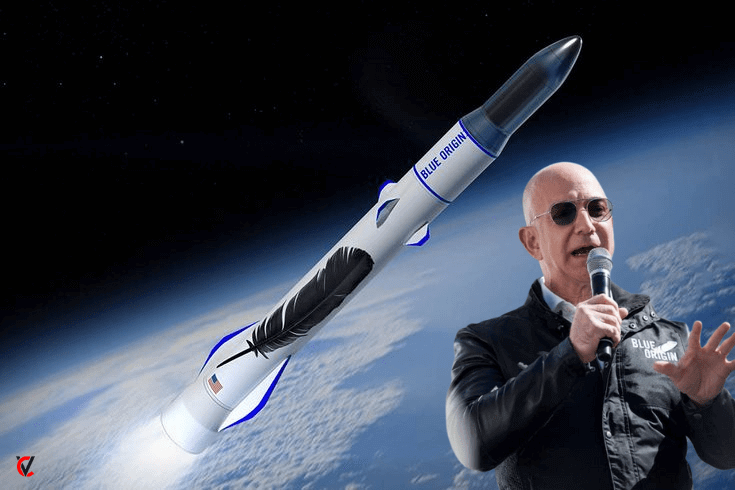
Blue Origin, the space exploration company founded by Jeff Bezos, is undergoing a period of significant strategic change as it works to scale its launch, satellite, lunar and deep-space ambitions. Reports of a potential workforce reduction of approximately 10% have raised questions about the company’s priorities, operational structure and efforts to improve efficiency as competition across the commercial space industry intensifies. However, the reported figure should be treated cautiously unless confirmed directly by Blue Origin or a highly reliable independent source.
The company has been expanding aggressively in recent years, building infrastructure, developing launch vehicles and pursuing government and commercial contracts. That expansion has created a large and increasingly complex organization spanning rocket manufacturing, propulsion, launch operations, spacecraft development, lunar systems and satellite communications. Any workforce restructuring would therefore represent more than a simple cost-cutting exercise; it could indicate an effort to concentrate talent and financial resources on programs considered most important to Blue Origin’s next phase of growth.
A Strategic Shift Toward Efficiency
If the reported workforce reduction is confirmed, the move would likely reflect Blue Origin’s broader attempt to become more operationally focused. Large aerospace programs require enormous investments in engineering, manufacturing, testing and infrastructure, and companies must balance long-term research with the need to deliver missions on schedule. Reducing or reorganizing selected teams can allow a company to redirect resources toward programs with clearer commercial or government demand.
Blue Origin has been pursuing an ambitious portfolio of projects, including the New Glenn orbital rocket, Blue Ring spacecraft, lunar systems and TeraWave satellite communications. The breadth of these initiatives creates significant opportunities but also requires substantial capital and highly specialized personnel. A restructuring could therefore be designed to reduce organizational complexity while maintaining investment in the programs that are closest to operational scale.
New Glenn Remains at the Center of Blue Origin’s Strategy
New Glenn is one of the most important programs in Blue Origin’s long-term strategy. The heavy-lift orbital rocket is designed to provide reusable access to space and support a wide range of commercial, civil and national-security missions. Blue Origin says the rocket’s reusable first stage is designed for a minimum of 25 flights, while its large payload fairing is intended to accommodate demanding satellite and constellation missions.
The company has already invested heavily in the infrastructure required to support New Glenn. In August 2026, Blue Origin announced construction of Launch Complex 36B at Cape Canaveral to support the larger 9×4 version of New Glenn, alongside additional infrastructure intended to support higher launch cadence and greater operational resilience. The company said it had invested more than $3 billion across more than 500 Florida suppliers and employed more than 4,500 people in Florida.
The scale of this investment suggests that New Glenn remains a central pillar of Blue Origin’s business strategy. Rather than simply reducing spending across the organization, any workforce restructuring would likely be evaluated against the company’s need to manufacture vehicles, maintain launch readiness, expand facilities and support an increasing number of missions.
New Glenn Faces an Important Test
Blue Origin’s New Glenn program is also operating through a demanding period. In May 2026, the company experienced an anomaly during a New Glenn integrated launch vehicle hotfire test at Launch Complex 36. Blue Origin subsequently said its investigation identified the main oxygen valve on one of the BE-4 engines as the source of the anomaly and that modified hardware was being prepared.
The company has been working to recover and rebuild its launch infrastructure while maintaining its broader production schedule. Blue Origin has said it intends to return New Glenn to flight before the end of 2026 and has adopted a hybrid horizontal-and-vertical integration approach intended to improve operational flexibility and launch cadence.
This makes operational efficiency particularly important. Delays in launch programs can increase costs and create pressure across manufacturing, testing and engineering teams. A more streamlined workforce structure could potentially help Blue Origin make faster decisions and concentrate resources on solving technical challenges and increasing launch frequency.
NASA Partnership Expands Blue Origin’s Role
Blue Origin’s relationship with NASA is another major component of its long-term strategy. The company has continued expanding its involvement in government space programs, including lunar exploration and advanced spacecraft development.
In July 2026, Blue Origin and NASA announced an agreement to use the historic B-Test Complex at NASA’s Stennis Space Center in Mississippi for New Glenn second-stage hotfire testing. The additional test infrastructure is intended to support upper-stage testing while reducing conflicts with launch operations at Cape Canaveral. Blue Origin said the partnership supports its goals around high-rate manufacturing, America’s return to the Moon and government and commercial missions.
More recently, in September 2026, NASA selected Blue Origin to develop and deliver a Mars Telecommunications Orbiter as part of NASA’s Mars Telecommunications Network. The project is intended to provide high-speed communications infrastructure between Earth and Mars and support future robotic and human exploration.
These developments demonstrate that Blue Origin’s ambitions extend well beyond launching rockets. The company is positioning itself as a broader space infrastructure provider, which could make workforce specialization and allocation increasingly important.
Blue Origin’s Lunar and Deep-Space Ambitions
Blue Origin is also investing heavily in technologies intended to support a sustained human presence beyond Earth. Its lunar ambitions include systems designed to support NASA’s broader Moon-to-Mars strategy, while its Blue Ring spacecraft platform is intended to provide in-space mobility and support multiple types of missions.
These programs require expertise across propulsion, spacecraft engineering, avionics, software, manufacturing and mission operations. Maintaining these capabilities while controlling costs presents a major management challenge. Any restructuring would therefore need to balance short-term efficiency with the specialized talent required to deliver highly complex space missions.
Blue Origin’s strategy increasingly appears to be moving from pure development toward building an integrated space business. That means the company must not only design advanced technology but also manufacture it at scale, launch it reliably and create recurring commercial demand.
Competition From SpaceX and Other Space Companies
The competitive environment makes these decisions particularly significant. SpaceX has established a powerful position in the launch market through reusable rockets, high launch frequency and an expanding satellite business. Other companies, including Rocket Lab and established aerospace contractors, are also developing increasingly capable launch and space systems.
For Blue Origin, competing effectively requires more than developing a powerful rocket. The company must demonstrate reliability, increase launch frequency, control costs and provide customers with predictable access to space. Reusability is an important part of that equation because frequent reuse can potentially reduce the cost of individual missions and increase the number of launches that can be performed with a given fleet.
New Glenn is therefore critical to Blue Origin’s competitive position. The company’s ability to move from individual missions toward a sustained launch cadence could determine how effectively it competes for commercial satellite launches, government missions and national-security contracts.
Workforce Restructuring Could Reflect a New Phase of Growth
If Blue Origin ultimately confirms a major workforce reduction, it could represent a transition from an expansion-focused organization toward a more execution-oriented company. During periods of rapid development, aerospace companies often build teams ahead of major production and operational milestones. Once programs mature, certain functions may become less necessary while demand increases for manufacturing, operations, testing and mission support.
Such restructuring does not necessarily mean that the company’s overall space ambitions are shrinking. Instead, it can indicate that management is attempting to move people and resources toward programs that have clearer schedules, customers and revenue opportunities.
At the same time, layoffs can create challenges for companies working on highly specialized technologies. Aerospace engineers, propulsion specialists, software developers and manufacturing experts often possess knowledge that is difficult to replace quickly. Maintaining institutional knowledge while improving efficiency is therefore likely to be one of the most important challenges facing Blue Origin’s leadership.
Blue Origin Continues to Invest Despite Restructuring Questions
Current developments at Blue Origin indicate that the company is still investing heavily in its future. The company is expanding launch infrastructure at Cape Canaveral, developing additional test capabilities with NASA and pursuing new communications and deep-space programs. Its careers site also continues to advertise a large number of positions across engineering, manufacturing, spacecraft systems and operations.
This continued investment makes the company’s workforce strategy more nuanced than a simple cost-cutting story. Blue Origin may be attempting to change the composition and organization of its workforce rather than simply reducing its overall technological ambitions.
The company’s current activities also suggest that management is attempting to build a more integrated and higher-cadence space business. New Glenn, satellite communications, spacecraft platforms, lunar systems and deep-space infrastructure all form parts of that strategy.
What the Workforce Changes Could Mean for Blue Origin
The impact of any workforce reduction will ultimately depend on where the cuts occur and how Blue Origin reallocates resources. If reductions are concentrated in administrative or overlapping functions, the company could potentially become more efficient without significantly affecting its core engineering capabilities. If major technical teams are affected, however, the consequences could be more significant, particularly for programs already facing demanding development schedules.
Investors, government customers and commercial partners will likely pay close attention to New Glenn’s launch cadence, manufacturing progress and the company’s ability to deliver its growing portfolio of space systems. Successful execution could demonstrate that Blue Origin’s restructuring is part of a deliberate strategy to improve operational performance.
Failure to meet important milestones, on the other hand, could raise questions about whether workforce reductions are creating additional pressure during a period when the company needs to accelerate development.
The Road Ahead for Blue Origin
Blue Origin remains one of the world’s most ambitious private space companies, backed by the substantial resources and long-term vision of Jeff Bezos. Its strategy has evolved from developing reusable suborbital vehicles to building orbital launch systems, lunar infrastructure, satellite networks and deep-space communications technologies.
The company now faces a crucial period in which execution will be just as important as innovation. New Glenn must demonstrate reliability and achieve a higher flight cadence, while Blue Origin must continue developing the infrastructure and spacecraft needed for its growing government and commercial commitments.
Whether the reported workforce reduction becomes a confirmed major restructuring or remains an unverified claim, the broader issue is clear: Blue Origin is entering a phase in which efficiency, execution and commercial scalability will become increasingly important. The company’s ability to turn years of investment into reliable launches, recurring customers and operational scale could ultimately determine whether it can close the gap with the industry’s most established competitors.
For now, Blue Origin’s continued investment in launch infrastructure, NASA partnerships, satellite communications and deep-space exploration suggests that its long-term ambitions remain intact. The coming years will show whether a more focused and operationally disciplined organization can translate those ambitions into sustained leadership in the rapidly evolving commercial space industry.
Related Articles: https://ciovisionaries.com/category/technology/
Related Blogs: https://ciovisionaries.com/category/artificial-intelligence/
Related Blogs: https://ciovisionaries.com/category/business/