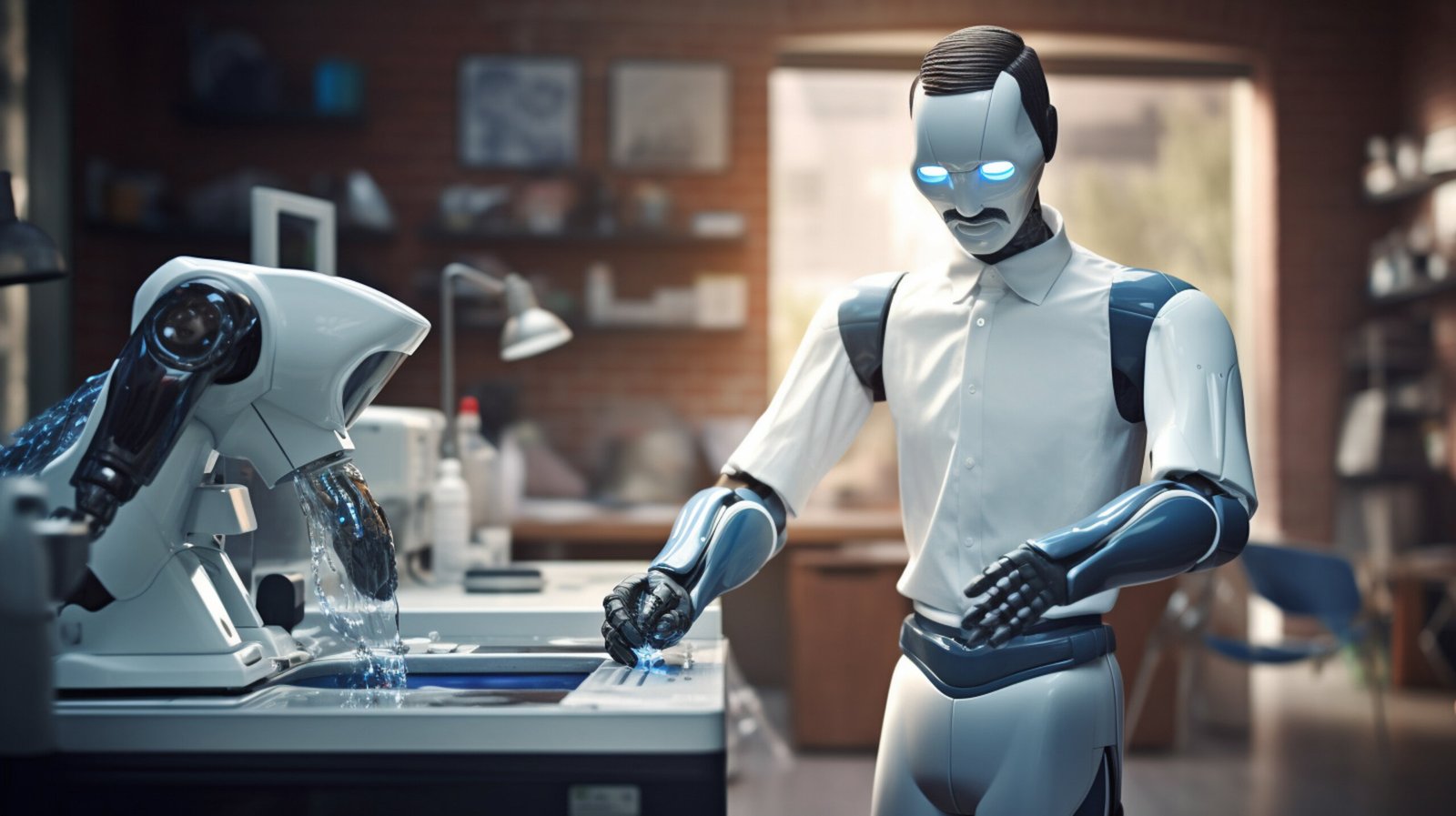
From spectacular demonstrations to measurable productivity
For years, humanoid robots existed mainly in the realm of demonstrations. They walked across stages, danced for audiences, performed carefully scripted movements and became symbols of what artificial intelligence might eventually accomplish in the physical world. In 2026, however, the conversation is changing as the robotics industry moves toward a more commercially focused phase. The central issue is no longer simply whether a robot can walk like a human or perform an impressive sequence of movements. The more important consideration is whether a humanoid can operate consistently in a real industrial environment, complete useful tasks safely, work for extended periods, adapt to changing conditions and generate enough economic value to justify its deployment. That shift is increasingly visible across the global robotics industry, where companies are moving demonstrations toward applications in manufacturing, logistics, parcel sorting, packaging and other repetitive physical activities.
The change in expectations is significant because industrial customers have very different requirements from technology audiences. A spectacular robotic movement may demonstrate sophisticated engineering, but manufacturers and logistics companies measure machines through reliability, productivity, operating costs, maintenance requirements and downtime. A factory does not need a robot simply because it can walk or balance on two legs. It needs equipment that can perform a defined task repeatedly and accurately while working safely alongside existing machinery and employees. A warehouse operator similarly needs a system capable of moving products efficiently without creating additional operational complexity. This is why the industry’s definition of success is gradually shifting away from demonstrations and toward measurable productivity.
Traditional industrial automation has generally relied on highly specialized machines. Robotic arms can weld, paint, assemble and move components with extraordinary precision, but they usually operate within carefully engineered environments designed specifically around their capabilities. Humanoid robotics proposes a different model. Instead of rebuilding the workplace to accommodate a machine, the machine is designed to operate within environments already created for humans. Doors, shelves, workbenches, carts, tools and production stations can potentially remain largely unchanged. This flexibility represents one of the strongest economic arguments for humanoid robots because companies could potentially introduce a new form of automation without completely redesigning existing facilities. The value of the technology therefore lies not simply in creating a machine with human-like movement, but in making existing physical environments increasingly programmable.
A successful humanoid deployment could eventually create a new category between traditional automation and human labor. Highly specialized machines will remain extremely effective for tasks that are repetitive, fast and predictable, while human workers will continue to provide judgment, creativity, problem-solving and adaptability. Humanoids could occupy the middle ground, handling physical activities that are too variable for conventional automation but structured enough for an intelligent machine to learn. This makes flexibility one of the defining characteristics of the technology and potentially one of the reasons manufacturers may eventually consider humanoids alongside conventional robotic systems.
The rise of physical AI
The technological development behind this movement is broader than robotics hardware. The industry is increasingly being shaped by physical AI, which refers to artificial intelligence systems designed not merely to process information but to perceive, interpret and interact with the physical environment. Traditional AI systems work primarily with digital information. They analyze documents, generate content, recognize images, write software and identify patterns. A humanoid robot must take the next step by transforming understanding into physical action. It must interpret its surroundings, determine where objects are located, understand how they can be manipulated and adjust its behavior when circumstances change.
The physical world introduces an enormous amount of uncertainty. A factory worker may place a component slightly differently from one shift to another. A package may be damaged or positioned differently from the expected location. A tool may be missing. A pallet may be moved several centimeters. Lighting conditions may change, machinery may obstruct a robot’s normal route and another worker may suddenly enter its operating area. Humans handle these variations naturally because they continuously interpret visual information, context and experience. For autonomous robots, however, seemingly minor differences can create major technical challenges.
Advances in AI models are therefore becoming increasingly important to robotics. Instead of programming every movement individually, developers are working toward systems capable of learning from examples and connecting visual information, language, movement and physical outcomes. The long-term objective is to make robots more adaptable, allowing them to understand instructions and translate those instructions into physical actions without requiring engineers to manually program every movement. A manufacturing manager could eventually provide an instruction describing a task while the robot determines the sequence of movements required to complete it. As robotics approaches this model, general-purpose machines could become significantly more economically attractive because their capabilities would increasingly be determined by software and learned behavior rather than by mechanical reconfiguration alone.
This convergence of AI and robotics is one of the most important developments in the broader technology industry. Artificial intelligence has become extremely powerful at operating within digital environments, but much of the global economy remains physical. Products must be manufactured, packages must be moved, warehouses must be organized, equipment must be maintained and materials must be transported. Physical AI represents an attempt to extend the capabilities of intelligent software into those real-world environments. If successful, it could transform robotics from a collection of pre-programmed machines into a more flexible form of industrial intelligence.
China emerges as a major battleground
No discussion of the current humanoid robotics race can ignore China, where robotics development has accelerated through a combination of manufacturing capacity, component supply chains, government policy, venture investment and intense competition among technology companies. The World Robot Conference in Beijing provides an important snapshot of this momentum, with hundreds of companies showcasing robotics technologies and humanoid systems increasingly being positioned for practical applications rather than simply futuristic demonstrations. The emphasis on manufacturing, logistics, packaging and other real-world activities reflects the industry’s broader movement toward commercial validation.
China’s advantage extends beyond the number of robotics companies operating within the country. A successful humanoid ecosystem requires access to motors, actuators, batteries, sensors, processors, precision mechanical components, software, manufacturing facilities and training data. China already has deep capabilities across many of these areas because of its position in electronics, electric vehicles, batteries, industrial equipment and advanced manufacturing. This creates the possibility of a reinforcing industrial cycle in which greater production volumes reduce component costs, lower prices encourage additional deployments, additional deployments generate more operational data and larger datasets contribute to improvements in robotic intelligence.
The financial markets are also beginning to reflect the strategic importance attached to the sector. Unitree Robotics became the first humanoid robot maker to debut on China’s mainland STAR Market in August 2026, attracting extraordinary investor enthusiasm. The company’s market debut demonstrates how rapidly robotics has moved from a specialist engineering sector into a major investment theme. The development is significant not only for Unitree itself but also for the broader Chinese robotics ecosystem because public-market access can provide companies with additional capital for manufacturing expansion, research, recruitment and technological development.
At the same time, the growth of China’s humanoid robotics sector highlights an important distinction between production capacity and genuine commercial demand. The ability to manufacture large numbers of robots is not necessarily evidence that companies have found sustainable markets for them. Recent reporting has raised questions about the role of government-backed training centers and other forms of institutional support in generating demand for humanoid systems. Government involvement can be valuable during the early stages of an emerging technology because infrastructure, research programs, training facilities and public procurement can help companies develop products and accumulate experience. However, the long-term success of the industry will depend increasingly on private-sector customers demonstrating that humanoid robots can generate measurable economic returns.
Manufacturing becomes the proving ground
Factories remain one of the most logical environments for humanoid robots because they offer a level of structure that is difficult to find in homes, streets or other uncontrolled environments. Workstations generally have defined locations, materials move through established processes, tasks are repeated and safety procedures are documented. Lighting, operating conditions and equipment can also be controlled to a greater degree than in many other environments. These characteristics make manufacturing an ideal setting for testing whether humanoid robots can deliver reliable productivity rather than simply impressive demonstrations.
Early deployments are therefore likely to focus on relatively narrow activities rather than immediately attempting to turn a humanoid into an all-purpose factory employee. A robot might be assigned to transport components, handle packages, sort materials, load equipment or perform repetitive assembly-related activities. This approach allows manufacturers to calculate the economic value of the system with greater precision. If a robot can reliably perform one activity for thousands of hours, the company can compare its total operating cost with the cost of existing labor or conventional automation.
Flexibility could eventually become the strongest argument for humanoids. A conventional machine may perform one task extremely efficiently but require substantial engineering work when production changes. A humanoid could potentially move between multiple tasks using the same physical platform, with software providing much of the adaptation. This could become particularly valuable as manufacturers face shorter product cycles, greater product variation and increasingly customized production requirements. The future factory is therefore unlikely to be a simple choice between humans and robots. It could instead contain specialized machines for highly repetitive processes, humanoids for flexible physical activities, software AI for planning and optimization, and human workers responsible for decision-making, supervision, maintenance and complex problem-solving.
Why automotive manufacturing matters
Automotive manufacturing could become one of the most important launchpads for humanoid robots because the industry already has decades of experience with industrial automation and highly structured production environments. Robotic arms have transformed welding, painting, assembly and material handling, making modern automobile factories some of the world’s most automated workplaces. Humanoid systems therefore face a demanding standard. They do not need to prove that robots can automate manufacturing because that has already been demonstrated. Instead, they must prove that general-purpose physical AI can economically automate tasks that conventional systems struggle to handle.
This is where flexibility becomes important. Specialized robotic systems will probably remain superior for many high-speed repetitive operations. A humanoid becomes more interesting when the task changes frequently, when the workplace is designed around human workers or when modifying the production line would be expensive. A flexible machine capable of learning several related activities could potentially reduce the need for companies to install a different specialized system for every workflow. As factories become more dynamic and production requirements become more varied, the ability to move a robotic platform from one task to another could become a major source of economic value.
Automotive manufacturers also have the advantage of being able to measure productivity with considerable precision. Production lines already track cycle times, defects, downtime and output. That means humanoid robots can be evaluated against established industrial metrics rather than vague expectations. If a robot reduces costs, improves throughput or increases flexibility, the value can be measured. If it requires excessive supervision or frequent maintenance, that weakness will also become visible quickly. The automotive industry could therefore serve as one of the most important proving grounds for the commercial future of humanoid robotics.
The economics of a robot worker
The humanoid business model ultimately depends on whether a machine can create more economic value than it costs to purchase and operate. This calculation is more complicated than simply comparing a robot’s purchase price with a worker’s salary. A company’s total cost of deploying a humanoid can include hardware, software, electricity, maintenance, replacement components, integration, training, insurance, downtime and human supervision. Human labor also involves costs beyond wages, including recruitment, training, turnover, benefits and workplace constraints. The comparison therefore needs to consider the complete operating economics of both options.
Robots offer several potential advantages. They can operate for long periods without fatigue, perform repetitive tasks consistently and potentially work in environments that are uncomfortable or dangerous for people. However, humans remain significantly more adaptable. Workers can respond to unexpected circumstances, understand subtle context and move between unrelated activities without requiring software retraining. A humanoid that performs one predictable activity exceptionally well may therefore be commercially attractive, while a machine requiring constant human intervention may struggle to compete economically.
This explains why industrial deployment is likely to happen task by task rather than through an immediate replacement of entire workforces. Companies will first identify activities where the economics are favorable, deploy robots in those areas and measure the results. Successful applications can then expand to additional facilities or workflows. Over time, improvements in hardware, software and manufacturing scale could make the technology competitive across a much broader range of tasks.
The first major lesson of the humanoid race
The robotics industry has reached a point where technological demonstrations are no longer sufficient to define success. The next stage will be determined by productivity, reliability and economics. The companies that ultimately dominate the market may not necessarily be those with the most spectacular robots. They may instead be the companies capable of solving the less glamorous problems that determine whether machines can operate successfully in real businesses, including battery life, component reliability, maintenance, safety, software updates, manufacturing costs, fleet management and integration with existing industrial systems.
The humanoid robot of the future will therefore need to become less like a science-fiction character and more like a dependable piece of industrial equipment. Its value will be determined by how many useful hours it can deliver, how consistently it can perform its assigned tasks and how easily companies can integrate it into existing operations. The industry’s greatest achievement may ultimately not be creating a machine that looks human but creating a machine that businesses can trust.
That development would make humanoid robotics much bigger than a robotics story. It would become a story about the future of manufacturing, the economics of labor, the global competition for technological leadership and the emergence of artificial intelligence capable of operating not only on screens but within the physical world. The transition from spectacular demonstrations to measurable industrial productivity is therefore likely to define the next stage of the humanoid robotics industry, determining which companies move beyond hype and become part of the infrastructure of the global economy.
China, the United States and the Battle to Build the World’s Robot Workforce
The humanoid robotics industry has entered a new phase in 2026. What was once primarily a competition between research laboratories and technology demonstrations is increasingly becoming a contest between industrial ecosystems. China, the United States, Europe, Japan and South Korea are all investing in humanoid robotics, but each approaches the opportunity from a different position. China brings enormous manufacturing capacity and component supply chains, the United States has major advantages in artificial intelligence, software and technology investment, Europe possesses deep industrial engineering expertise, Japan has decades of experience in robotics and automation, while South Korea has considerable strength in electronics, batteries and semiconductors. The companies and countries that eventually gain the greatest influence may therefore not simply be those that build the most recognizable robots, but those that can create the most complete ecosystem around physical AI.
The significance of this competition is becoming clearer as humanoid robotics moves toward practical deployment. At the 2026 World Robot Conference in Beijing, more than 300 companies are showcasing robotics technologies, with humanoid systems increasingly being demonstrated for manufacturing, logistics, packaging and other real-world applications. This represents a significant change in the industry’s priorities because the focus is shifting from proving that humanoid robots can perform impressive movements to demonstrating that they can provide measurable economic value. The financial markets are also paying close attention. Unitree Robotics became the first humanoid robot maker to debut on China’s mainland STAR Market in August 2026, generating strong investor enthusiasm and reinforcing the perception that robotics could become a strategically important technology industry.
China: Manufacturing Scale Meets Physical AI
China has emerged as one of the most important centers of the global humanoid robotics race because it combines several capabilities that are difficult for competitors to reproduce quickly. The country has extensive manufacturing capacity, established supply chains for electronics and mechanical components, a large domestic industrial market and significant government support for robotics and artificial intelligence. These advantages are particularly important because humanoid robots require far more than sophisticated software. Each machine depends on motors, actuators, batteries, sensors, processors, cameras, control systems, precision gears, mechanical structures and numerous other components. Producing these components consistently and affordably at large scale could become just as important as developing the artificial intelligence that controls the robot.
China’s existing industrial base provides a potential foundation for this expansion. The country’s experience in electric vehicles, batteries, consumer electronics, industrial automation and advanced manufacturing means that many of the technologies required for humanoid robots already exist within the broader manufacturing ecosystem. If suppliers can adapt these capabilities to robotics, production costs could gradually decline as volumes increase. Lower component prices could make robots more affordable for factories and logistics companies, while greater deployment could produce additional operational data that helps improve robotic intelligence. This creates the possibility of a powerful industrial feedback loop in which manufacturing scale supports lower costs, lower costs encourage adoption, adoption generates more data and improved robots create additional demand.
This potential advantage is one reason China has become such an important market for humanoid robotics. The country’s large industrial sector provides manufacturers with numerous environments in which robots can be tested and refined. Factories, warehouses and logistics facilities offer structured conditions where companies can measure robot performance and gradually expand their applications. The scale of the domestic market could also allow successful companies to collect experience more quickly than firms operating in smaller markets. However, the long-term strength of the sector will ultimately depend on whether these deployments develop into sustainable commercial demand rather than remaining dependent on government programs or experimental projects.
Unitree’s IPO Changes the Conversation
Unitree Robotics has become an important symbol of the growing financial importance of humanoid robotics. Its debut on China’s mainland STAR Market in August 2026 attracted extraordinary investor attention and demonstrated that public markets are beginning to view robotics as a major technology opportunity rather than a specialized engineering field. The significance of such a listing extends beyond one company because access to public capital can provide robotics manufacturers with additional resources for research, factory expansion, component development, recruitment and international growth.
The development also illustrates how closely robotics, artificial intelligence, manufacturing and financial markets are becoming connected. A successful humanoid company needs to spend heavily before it reaches mass production. Engineers must develop mechanical systems, AI models and control software while manufacturers must build production capabilities and establish reliable supply chains. Investors therefore play an important role in financing the transition from prototypes to commercial products. Strong market enthusiasm can accelerate that process by giving successful companies greater access to capital, although it can also create pressure when valuations rise faster than actual commercial adoption.
That distinction is particularly important in an industry that is still developing its business model. A high company valuation does not necessarily mean that humanoid robots have already achieved widespread industrial adoption. Large numbers of prototypes, demonstrations and pilot programs can create the appearance of a rapidly expanding market without necessarily proving that customers are receiving strong financial returns. The real test will be whether independent companies continue purchasing robots because the machines improve productivity, reduce costs or provide capabilities that conventional automation cannot deliver.
The American Challenge: Manufacturing at Scale
The United States approaches humanoid robotics from a different position. Its greatest potential advantage lies in artificial intelligence, software, advanced computing and technology investment. American companies and research institutions have played a major role in the development of modern AI models, computer vision and machine-learning systems. These capabilities are increasingly relevant to robotics because a humanoid needs more than mechanical strength. It must interpret its environment, recognize objects, understand instructions, make decisions and adapt its movements to changing circumstances.
Companies such as Tesla, Figure AI and Boston Dynamics represent different approaches to the American robotics ecosystem. Tesla brings expertise in artificial intelligence, computer vision, batteries, electric motors and large-scale manufacturing. Figure AI has focused heavily on general-purpose humanoid systems intended to operate in environments designed for people. Boston Dynamics has decades of experience developing robots capable of advanced movement, balance and navigation. Although their strategies differ, all demonstrate the broader American ambition to combine sophisticated AI with increasingly capable physical machines.
The major challenge for the United States is converting technological intelligence into large-scale manufacturing. Building an advanced prototype is very different from producing hundreds of thousands of reliable robots at competitive prices. A humanoid manufacturer can develop an impressive AI system, but if its actuators are expensive, its batteries are difficult to source or its mechanical components cannot be produced consistently at volume, the final machine may remain too expensive for widespread deployment. The United States therefore faces a strategic manufacturing question as it attempts to build a competitive physical-AI industry.
The answer could involve domestic manufacturing, partnerships with allied economies and increased investment in robotics component supply chains. The issue is becoming more significant because humanoid robotics is increasingly connected to national economic and security policy. Governments are beginning to consider robotics alongside semiconductors, AI and advanced manufacturing as strategic technologies. This could encourage domestic production, but it could also increase costs if companies are required to replace efficient global supply chains with more expensive regional alternatives.
Europe: Industrial Expertise Meets a Strategic Wake-Up Call
Europe enters the humanoid robotics race with significant industrial advantages of its own. Germany, Italy, France and other European economies possess deep expertise in automotive manufacturing, industrial automation, precision engineering and advanced machinery. European companies have spent decades building some of the world’s most sophisticated factories and developing technologies that allow machines and human workers to operate safely together. This knowledge could become highly valuable as humanoid robots move from experimental environments into industrial workplaces.
Europe’s challenge is primarily one of scale and coordination. The region has world-class engineering companies and research institutions, but its technology ecosystem is more fragmented than those of the United States and China. Europe does not possess the same concentration of large AI platforms as the United States, nor does it have China’s enormous manufacturing ecosystem. As a result, European policymakers and industrial leaders are increasingly considering humanoid robotics as a strategic technology that requires greater coordination and investment.
This creates an opportunity for Europe to focus on areas where it already possesses strong advantages. Instead of attempting to dominate every part of the humanoid ecosystem, European companies could concentrate on industrial applications where their knowledge of manufacturing, safety and engineering gives them an advantage. Automotive factories, logistics centers, precision manufacturing facilities and healthcare environments could become important testing grounds. Europe’s large industrial customer base could also provide robotics companies with valuable real-world environments for refining their systems.
The European opportunity is therefore not necessarily about producing the largest number of robots. It could be about developing highly reliable machines and industrial systems that meet demanding safety and performance requirements. As humanoids become more common, businesses will need robots that can integrate with existing production systems, operate safely around workers and maintain predictable performance. European engineering expertise could become particularly valuable in this area.
Japan: Experience With Robots, New Pressure From AI
Japan has one of the world’s deepest relationships with robotics. Its industrial companies have spent decades developing automation systems for manufacturing, electronics and other industries, while Japanese society has also shown a longstanding interest in robots as part of everyday life. This history provides an important advantage because Japanese manufacturers understand that the commercial value of a robot depends heavily on reliability, precision and long-term performance.
The humanoid revolution nevertheless introduces a new technological challenge. Traditional industrial robots generally operate according to carefully programmed instructions within controlled environments. Physical AI requires machines to learn, interpret and adapt. A humanoid may need to respond to objects that are not positioned exactly as expected or adjust its movements based on changing conditions. This requires a combination of mechanical engineering and artificial intelligence that is different from traditional industrial automation.
Japan’s aging population and labor constraints could strengthen the economic case for advanced robotics. Industries facing shortages of workers may have stronger incentives to adopt machines capable of performing repetitive physical activities. This could make Japan an important testing ground for humanoids designed for manufacturing, logistics, healthcare support and other labor-intensive environments. The country’s reputation for precision and reliability could also influence the standards that businesses expect from the next generation of robots.
South Korea: The Electronics and Manufacturing Advantage
South Korea is another important participant because of its strengths in semiconductors, electronics, batteries and advanced manufacturing. These industries are closely connected to humanoid robotics because modern robots require sophisticated processors, energy storage, sensors, motors and power-management systems. Even if South Korea does not produce the largest number of humanoid platforms itself, its companies could become important suppliers to the global robotics ecosystem.
This highlights a broader feature of the humanoid economy. The most valuable companies may not always be the manufacturers whose logos appear on the robots. A successful humanoid industry will require thousands of components and supporting technologies. Semiconductor manufacturers, battery producers, actuator suppliers, sensor companies, precision-engineering firms and software providers could all benefit from the growth of the market.
South Korea’s existing industrial base could therefore give it an important role in the supply chain. As humanoid production expands, demand for specialized components could increase significantly. Companies capable of producing those components at high quality and competitive prices could become strategic suppliers to robotics manufacturers around the world.
The Hidden Battle Is Happening Inside the Robot
One of the biggest misconceptions about humanoid robotics is that competition is primarily about which company can build the most impressive-looking machine. In reality, one of the most important battles is happening inside the robot, at the component level. The performance of a humanoid depends on a complex combination of actuators, motors, reducers, batteries, sensors, cameras, processors and mechanical structures, and weakness in any one of these areas can limit the overall system.
Actuators are particularly important because they determine how efficiently a robot can generate controlled movement. A humanoid needs enough strength to lift and manipulate objects while remaining relatively lightweight and energy-efficient. Oversized components can increase weight and energy consumption, while undersized systems can limit the robot’s usefulness. Manufacturers therefore face a constant engineering challenge in balancing strength, precision, size, cost and efficiency.
Batteries create another major constraint. Humanoids require enough energy to move continuously while carrying their own power source. A larger battery can provide more operating time but adds weight, which increases the energy required for movement. Better battery technology could therefore have a major impact on the economics of humanoid robots because longer operating periods would reduce charging downtime and increase useful working hours.
Sensors are equally important because physical AI depends on accurate information about the surrounding environment. Cameras can provide visual information, while depth sensors, force sensors and other systems help robots understand distance, contact and movement. The combination of these technologies allows a robot to determine not only what is around it but also how it should interact with objects and people. As AI models become more capable, the quality and quantity of sensor data could become a major competitive factor.
Data Could Become the New Competitive Moat
Hardware can be manufactured, factories can be built and capital can be raised, but useful real-world robotics data may become much more difficult to replicate. A humanoid operating in an industrial environment can generate enormous amounts of information about physical interactions, including how objects behave when lifted, how much force is required to manipulate different materials, how workers move around machines and how robots recover when tasks do not proceed as expected.
This creates the possibility of a powerful competitive advantage for companies that deploy large numbers of robots. Every successful task can generate additional information that can be used to improve robotic behavior, while failed attempts can reveal weaknesses that need to be corrected. As the number of deployed machines increases, the amount of real-world data available to the manufacturer can also grow.
Physical AI data is different from conventional digital AI data because collecting it requires actual machines operating in real environments. A computer can process millions of digital examples rapidly, but a robot must physically perform an action before it can learn from the outcome. This makes high-quality robotics data more expensive and potentially more valuable. Companies that build large fleets could therefore create a data advantage that strengthens their AI models and makes their robots more capable over time.
The Race Is Becoming Geopolitical
Humanoid robotics is increasingly becoming a geopolitical issue because intelligent machines could eventually influence the productive capacity of entire economies. Countries with large populations are not necessarily guaranteed an advantage if machines can perform significant amounts of physical work. Conversely, countries facing aging populations and labor shortages could use robotics to maintain industrial output with fewer workers.
This could eventually change the geography of manufacturing. For decades, companies have often located factories in regions where labor costs were relatively low. If humanoid robots significantly reduce the importance of labor costs, companies may have more flexibility in deciding where production should take place. Highly automated factories could potentially operate closer to major consumer markets, shortening supply chains and reducing dependence on distant production centers.
The strategic implications are significant. China possesses major manufacturing and component capabilities, while the United States has exceptional strengths in AI, software and technology capital. Europe brings industrial engineering, Japan brings robotics expertise and South Korea contributes major capabilities in electronics, batteries and semiconductors. The global humanoid industry is therefore likely to develop as a network of interconnected strengths rather than a competition in which one country controls every layer.
A New Industrial Stack Is Emerging
The humanoid economy can increasingly be understood as a layered industrial system. At the foundation are raw materials, energy and manufacturing infrastructure. Above those are motors, batteries, sensors, semiconductors, actuators and precision mechanical components. These technologies support the physical robot platform, which is then combined with control software, artificial intelligence, fleet-management systems and enterprise applications.
The customer sits at the top of this stack, but value can be captured at every level. A semiconductor company may benefit from increased demand for robotics processors. A battery manufacturer may supply energy systems to multiple robot makers. A software company may provide the intelligence that controls fleets of machines. A component supplier may become indispensable because its technology is difficult to replace.
This means the humanoid robotics race should not be viewed simply as a contest between individual robot manufacturers. It is the development of a new industrial ecosystem in which hardware, AI, manufacturing, data and software increasingly depend on one another.
The Great Test: Can Robots Become Platforms?
The long-term ambition of the humanoid industry is not simply to sell a robot. It is to create a physical platform capable of acquiring new skills through software and AI. A company could potentially purchase a humanoid for one task and later expand its responsibilities without replacing the entire machine. A robot might begin by moving materials and later learn inspection, machine loading or other activities as its software capabilities improve.
This would fundamentally change the economics of robotics. Instead of buying a separate specialized machine for every new task, businesses could potentially deploy flexible platforms capable of performing multiple activities. Hardware would remain relatively stable while software and AI would expand the robot’s capabilities.
The challenge is generalization. A machine that performs one task perfectly can already provide value, but a machine capable of learning and reliably performing hundreds of different tasks would represent a much more significant technological breakthrough. The industry is still moving toward that level of flexibility, and the ability to generalize across tasks will likely determine how quickly humanoids move from specialized industrial deployments toward genuinely general-purpose systems.
The Coming Battle Will Be Decided on the Factory Floor
The next stage of the humanoid robotics industry will be determined increasingly by what happens after the demonstrations end. Companies will need to show that robots can work for long periods, perform useful tasks, operate safely alongside humans, integrate with existing systems and deliver measurable returns. Investors will increasingly examine deployment numbers, operating hours, autonomy rates, maintenance costs and customer retention rather than simply counting prototypes or public demonstrations.
The industry does not need millions of humanoid robots immediately to prove that the technology is commercially viable. It needs enough successful deployments to demonstrate a repeatable business model. Once manufacturers can show that a robot consistently performs a valuable task at a competitive cost, adoption could accelerate as other companies copy the model and expand deployments.
This is why the next phase of humanoid robotics will be less about creating machines that appear futuristic and more about building machines that businesses are willing to depend on. The global competition is ultimately a contest over manufacturing scale, artificial intelligence, components, data, capital and industrial customers. The countries and companies that successfully combine those elements could shape the future of physical AI and influence how the global economy organizes work during the next decade.
The humanoid race is therefore entering a decisive period. China has demonstrated significant manufacturing momentum and financial enthusiasm, the United States is pushing the boundaries of AI-driven robotics, Europe is examining how to protect and expand its industrial position, Japan is combining robotics experience with new AI capabilities, and South Korea is leveraging its strengths in electronics, batteries and semiconductors. The final outcome will depend not on a single technological breakthrough but on which ecosystems can consistently turn advanced robotics into reliable, affordable and economically productive machines.
Jobs, Investment, Industries and the Road to 2030
The most important stage of the humanoid robotics revolution is no longer about proving that machines can walk, balance or perform impressive movements. Those capabilities have already attracted enormous attention from technology companies, investors and governments. The next question is whether intelligent machines can become economically useful enough to operate as part of the global workforce. If humanoid robots can perform physical tasks reliably, safely and at a competitive cost, their impact could extend far beyond the robotics industry. Manufacturing, logistics, construction, healthcare, agriculture, retail, hospitality and other sectors could gradually reorganize around a combination of human workers, conventional automation and increasingly capable physical AI systems. The transition will not happen instantly, and the technology still faces significant challenges involving cost, reliability, battery life, safety, artificial intelligence and maintenance. However, the period between 2026 and 2030 could become an important testing ground for whether humanoid robots can move from an exciting technology story into a genuine economic transformation.
The Robot Has to Earn Its Salary
The simplest way to understand the future economics of humanoid robotics is to treat the machine as an economic asset rather than simply as a technological product. Businesses do not purchase forklifts, industrial robots or automated machinery because the equipment is impressive; they purchase those systems because the machines perform useful work and generate a return on investment. Humanoid robots will ultimately face the same commercial reality. Companies will evaluate the purchase price, software costs, electricity consumption, maintenance, downtime, safety requirements, human supervision and productivity delivered by each machine. A robot that costs a significant amount but operates for long periods, performs difficult physical tasks and requires limited supervision could become economically attractive. A cheaper machine that frequently fails, needs constant human intervention or performs tasks more slowly than expected could be much less valuable. This means the robotics industry’s most important metric may eventually become the cost of delivering a useful hour of physical work rather than the technical sophistication of the robot itself.
The comparison between robots and human labor will also be more complicated than simply comparing the robot’s purchase price with an employee’s salary. Human workers bring adaptability, judgment, communication and problem-solving abilities that current robots cannot consistently reproduce. At the same time, human labor involves recruitment, training, turnover, benefits, workplace safety requirements and limitations on working hours. Robots could potentially operate for extended periods, perform repetitive activities without fatigue and work in environments that are uncomfortable or dangerous for people. The economic advantage will therefore depend on the particular task and operating environment. Humanoid robots are unlikely to replace every type of worker, but they could become increasingly competitive in specific activities where physical repetition, labor shortages or workplace risks create strong incentives for automation.
The Economics of Scale Could Change Everything
The current cost of humanoid robots remains one of the biggest obstacles to mass adoption, but manufacturing scale could eventually transform the economics. New technologies are generally expensive during their early stages because production volumes are limited, components are specialized and manufacturing processes are still being refined. As production increases, suppliers gain greater incentives to improve efficiency, standardize components and reduce costs. The same process could occur in humanoid robotics. Higher production volumes could lead to cheaper actuators, motors, sensors, batteries and electronic components while automated manufacturing could reduce assembly costs. Software improvements could also make individual robots more capable without requiring major hardware changes.
This could create a powerful cycle for the industry. If robots become cheaper, more businesses can afford to test them. Greater adoption creates larger production volumes, which can reduce component costs further. More robots operating in real environments produce additional training and performance data, helping manufacturers improve their AI systems. Better AI makes the robots more useful, increasing demand and encouraging even greater production. Such a cycle could eventually move humanoid robotics from an expensive specialist technology toward a mainstream industrial platform. However, reaching that stage will require manufacturers to prove that the machines can deliver reliable economic value before large-scale production becomes sustainable.
Which Industries Will Adopt Humanoids First?
The adoption of humanoid robots is unlikely to occur equally across every sector. Industries with repetitive physical tasks, structured environments, labor shortages and clear productivity measurements are likely to move first. Manufacturing and logistics are particularly well positioned because companies already use automation extensively and can compare robotic productivity against established operational metrics. Warehouses, distribution centers and factories also provide controlled environments where robots can be trained and monitored more effectively than in unpredictable public spaces. As the technology becomes more reliable, applications could gradually expand into healthcare, construction, agriculture, hospitality and retail.
The early stages of adoption will probably focus on specific tasks rather than entire occupations. A company may use humanoids for moving materials, sorting packages, loading machines or handling repetitive components while human workers continue to manage quality, exceptions and decision-making. This task-based approach could make adoption easier because businesses do not need to redesign their entire workforce immediately. Instead, they can identify areas where automation provides measurable benefits and gradually expand the role of robots as the technology improves. Over time, successful deployments could provide a blueprint for other companies and industries.
1. Manufacturing
Manufacturing is likely to remain one of the most important markets for humanoid robots because factories already contain many activities that are repetitive, physically demanding and relatively structured. Humanoids could potentially move materials, handle components, support assembly, perform inspections, package products and load equipment. Their greatest advantage may emerge in situations where conventional industrial robots are too specialized. A traditional robotic arm can be extremely efficient when performing the same movement thousands of times, but a humanoid could potentially move between different activities without requiring an entirely new mechanical system.
The flexibility of humanoids could become particularly valuable as manufacturers respond to shorter product cycles and greater customization. A factory producing several product variations may benefit from a machine that can learn different tasks through software rather than relying on separate specialized equipment for each process. This could allow manufacturers to build more flexible production environments while retaining humans for activities that require judgment, coordination and problem-solving. The result would not necessarily be a factory without people but a factory in which humans and robots perform different parts of the same production system.
2. Warehousing and Logistics
Warehousing and logistics represent another major opportunity because the sector contains large numbers of repetitive physical activities. Workers move packages, sort products, transport materials, load containers and organize inventory, often under demanding time constraints. Conventional automation has already transformed many warehouses, but certain tasks remain difficult to automate because objects vary in size, shape and position. Humanoid robots could potentially address some of these gaps by operating in environments designed for human workers.
The commercial value of humanoids in logistics will depend heavily on speed, reliability and coordination. A warehouse does not benefit from a robot that can perform an impressive movement if it takes too long to complete ordinary tasks. Robots will need to work alongside existing automated systems and human employees while maintaining predictable performance. If manufacturers can achieve that level of reliability, humanoids could become another layer of warehouse automation, handling activities that currently require large numbers of workers or extensive manual intervention.
3. Automotive
Automotive manufacturing could become one of the most influential testing grounds for humanoid robots because the industry already has sophisticated automation systems and strict productivity requirements. Car manufacturers can measure production speed, defect rates, downtime and labor requirements with considerable precision, making it easier to determine whether humanoid robots actually provide value. The challenge for humanoid manufacturers will be demonstrating that their machines can perform tasks that conventional industrial robots cannot already perform more efficiently.
The strongest opportunity may therefore lie in flexibility. Humanoids could potentially handle tasks that change frequently, operate within existing human-oriented workstations and support production processes without requiring extensive factory redesign. If a robot can learn several different activities and move between them efficiently, automotive manufacturers may find it valuable for flexible production environments. Successful deployments in automotive plants could also provide credibility for the wider industry because other manufacturers could evaluate the same technology against similar operational requirements.
4. Electronics
Electronics manufacturing provides another potential market because production environments often require precision, repetitive handling and controlled conditions. At the same time, electronics products can have relatively short lifecycles, forcing manufacturers to adapt production processes quickly. This combination could create demand for flexible automation. A humanoid capable of learning new handling and assembly tasks could potentially be redeployed when product requirements change.
However, electronics manufacturing also demonstrates why technical precision matters. Small errors can create expensive defects, and the value of high-speed conventional automation is already significant in many facilities. Humanoid robots will therefore need to demonstrate not only flexibility but also sufficient accuracy and consistency. Their strongest commercial role may initially involve material handling and supporting activities rather than replacing highly specialized machines.
5. Healthcare
Healthcare could eventually become one of the largest markets for humanoid robotics, but adoption will probably progress more slowly because safety requirements are extremely high and working environments are unpredictable. Hospitals contain patients, medical equipment, staff and visitors moving through shared spaces. A robot operating around vulnerable people must be able to understand its environment and respond safely to unexpected situations.
The earliest healthcare applications may therefore focus on support activities rather than direct patient care. Robots could potentially transport supplies, move equipment, organize inventory, assist with cleaning or perform other repetitive physical tasks. This could reduce the amount of time healthcare professionals spend on routine activities and allow them to concentrate more heavily on patient care. In the longer term, advances in physical AI could open additional possibilities, but healthcare will require a significantly higher level of reliability and certification than many industrial applications.
6. Construction
Construction represents one of the most promising long-term markets because it combines labor shortages, physically demanding tasks and dangerous working environments. Workers routinely lift materials, move equipment and perform repetitive activities under conditions that can involve uneven surfaces, dust, noise and changing workspaces. Humanoid robots could potentially assist with material handling, inspection, drilling, installation and other activities that expose workers to physical risks.
The challenge is that construction sites are considerably less predictable than factories. A production line can be designed around a robot, while a construction site changes constantly as a building develops. A robot must therefore navigate different surfaces, identify objects in changing positions and respond to workers and equipment operating around it. This makes construction a particularly demanding test of physical AI. If humanoids eventually become capable of operating reliably in such environments, their potential economic impact could be substantial.
7. Agriculture
Agriculture presents another major opportunity because many regions face seasonal labor shortages and difficult working conditions. Farming environments are less controlled than factories, with changing weather, uneven ground, irregular plants and constantly changing physical conditions. These factors make agricultural robotics difficult, but they also create strong economic incentives for automation.
Humanoids may eventually complement rather than replace specialized agricultural machinery. Different robots could handle planting, harvesting, transportation and inspection, while humanoid systems could perform tasks requiring greater physical flexibility. Advances in computer vision and physical AI will be essential because agricultural robots need to recognize objects and conditions that are far less standardized than industrial components.
8. Hospitality and Retail
Retail and hospitality could eventually become important markets for humanoids, particularly for stocking, cleaning, transporting materials and performing back-of-house activities. These environments contain many tasks that are repetitive but take place around humans, requiring robots to move safely through shared spaces. Customer-facing applications would be more difficult because people expect machines operating near them to behave predictably and safely.
The commercial opportunity may therefore begin away from direct customer interaction. Hotels could use robots to move supplies, warehouses could use them for inventory, restaurants could deploy them for repetitive preparation or transportation tasks, and retail businesses could use them for stocking. As reliability improves, more visible customer-facing roles could become possible.
The Workforce Question
The effect of humanoid robots on employment will probably become one of the most debated economic issues of the next decade. Automation has historically changed the composition of employment rather than simply eliminating every job associated with a technology. Manufacturing provides a clear example. As factories became increasingly automated, certain manual tasks declined while demand grew for technicians, engineers, maintenance specialists, software professionals and other skilled roles.
Humanoid robotics could produce a similar transformation, although the speed of change could be significant if physical AI becomes capable of handling a wide range of tasks. Companies may need fewer workers for repetitive physical activities while creating more demand for people who manage robotic fleets, train AI systems, maintain machines, analyze performance and design human-machine workflows. New occupations could develop around robotics safety, physical-AI evaluation, fleet operations and robot cybersecurity.
The challenge is that workers whose jobs change may not automatically possess the skills required for emerging positions. A warehouse worker displaced from repetitive material handling may need training to supervise automated systems or maintain robotic equipment. Governments, educational institutions and companies will therefore face increasing pressure to develop practical retraining programs. The success of the humanoid economy may depend partly on whether workers can move into new roles quickly enough to participate in the productivity gains created by automation.
The Middle Class and the Automation Debate
The impact on wages could become as important as the impact on employment. If humanoid robots become capable of performing large amounts of physical labor, the value of certain manual skills could decline, particularly in jobs where tasks can be standardized and automated. Businesses could gain greater flexibility and reduce dependence on difficult-to-fill positions, while workers may face increased pressure to develop technical, interpersonal and problem-solving capabilities that remain difficult for machines to reproduce.
At the same time, automation can increase productivity and lower the cost of goods and services. If businesses use robots to produce more efficiently, consumers could potentially benefit from lower prices while companies could invest additional resources into new products and industries. Higher productivity can create economic growth and new demand for labor, but the distribution of those benefits is not automatic. Corporate decisions, taxation, education, labor policy and investment will influence whether robotics produces broad prosperity or concentrates wealth among technology owners and investors.
The social impact of humanoid robotics will therefore depend not only on the machines themselves but on how economies respond to them. A future in which robots increase productivity while workers receive opportunities for retraining, higher-value employment and shorter working hours could look very different from a future in which automation mainly reduces labor demand while productivity gains accumulate elsewhere. The technology creates possibilities, but institutions will determine how those possibilities are distributed.
The Investment Boom Has a Dark Side
The extraordinary investor enthusiasm surrounding humanoid robotics also creates the possibility of an investment bubble. Emerging technologies frequently attract capital before their commercial economics are fully proven. Companies can receive high valuations based on expectations of future markets, competitors can rush into the sector and investors can begin valuing businesses according to projected technological breakthroughs rather than current revenue or profitability.
Humanoid robotics could experience a similar cycle. The technology has many of the characteristics that attract speculative investment: a large potential market, strong artificial intelligence connections, government interest, dramatic demonstrations and the possibility of transforming entire industries. However, the distance between a prototype and a profitable industrial product remains substantial. Companies must demonstrate that their machines can operate reliably, that customers are willing to pay for them and that manufacturing costs can fall sufficiently to support large-scale deployment.
A market correction would not necessarily mean that humanoid robotics had failed. It could instead eliminate weaker business models and force the industry to become more disciplined. Companies with strong technology but unrealistic economics may struggle, while businesses with genuine customers and efficient manufacturing could become stronger. The long-term development of robotics may therefore include periods of intense enthusiasm followed by consolidation, similar to other major technology industries.
The Difference Between Hype and Adoption
The history of technology repeatedly demonstrates that public attention and commercial adoption are not the same thing. A machine can attract millions of views online while providing little economic value, whereas an unremarkable-looking industrial system can transform an entire production process without receiving significant public attention. Humanoid robotics will eventually be judged by the second standard.
A successful deployment will involve a robot operating for thousands of hours, completing useful tasks, recovering from errors, working safely around people and generating a measurable return. This is much more demanding than performing a carefully prepared demonstration. The industry will therefore increasingly need to publish evidence about operating hours, autonomy levels, task completion rates, maintenance requirements and economic performance.
As that evidence accumulates, businesses will be able to distinguish between robots that are technologically impressive and robots that are commercially useful. The companies that consistently demonstrate the latter will likely become the most important players in the sector.
Safety Will Become a Competitive Advantage
Safety will become one of the most important factors in humanoid adoption because these machines are designed to operate in environments occupied by humans. A robot that is physically powerful must also be capable of controlling that power precisely. It must detect obstacles, recognize people, understand its surroundings and adjust its behavior when circumstances change.
Safety systems will need to operate at both the hardware and software levels. Sensors can help detect physical contact and nearby objects, while AI systems can interpret movement and environmental conditions. Emergency shutdown systems, controlled force, restricted operating zones and software safeguards will also become increasingly important. Companies that can demonstrate strong safety performance may gain a significant commercial advantage, particularly in industries such as healthcare, manufacturing and construction.
Regulators will also face new questions about certification and liability. As robots become more autonomous, determining responsibility for accidents could become more complicated. Manufacturers, software providers and businesses operating the machines may all share responsibility depending on the circumstances. Clear safety standards and reporting requirements will therefore become an important part of the industry’s development.
Cybersecurity: The Overlooked Risk
Humanoid robots will increasingly connect physical systems with digital networks, creating cybersecurity risks that are different from those associated with conventional software. A compromised computer can expose information or disrupt digital services, but a compromised physical robot could potentially move equipment, damage products or create safety hazards.
As robot fleets become connected to cloud platforms and AI systems, manufacturers will need to secure communication, software updates, authentication and access controls. Companies will also need procedures for responding to compromised machines and isolating individual robots from wider networks. Cybersecurity will therefore become part of physical safety rather than simply an IT issue.
This could create a new competitive dimension for the industry. Businesses may prefer robotic platforms that provide strong security architecture, reliable software updates and transparent monitoring even if those systems cost more than cheaper alternatives. The safest and most secure robot could ultimately become more valuable than the cheapest robot.
Energy Could Become a Limiting Factor
Another major challenge for humanoid robotics is energy. Walking, lifting, balancing and continuously processing sensor information require substantial power. A humanoid robot must carry its own energy source while keeping its weight low enough to remain efficient and mobile. A larger battery can extend operating time but increases weight, while a heavier robot requires more energy to move.
Battery technology will therefore have a direct influence on robot economics. A machine that can operate for an entire shift with minimal charging interruptions will be considerably more useful than one that requires frequent downtime. Advances in batteries, motors and power electronics could therefore be as important to commercial adoption as improvements in artificial intelligence.
Large-scale deployment could also increase electricity demand. If factories, warehouses and other facilities eventually operate hundreds or thousands of humanoids, businesses will need sufficient charging infrastructure and energy capacity. Robotics could therefore become increasingly connected to the broader energy transition, especially as companies seek low-cost and reliable electricity for automated operations.
By 2030, What Could the Workplace Look Like?
The exact number of humanoid robots that could be operating by 2030 remains difficult to predict because technology adoption rarely follows a straight line. Manufacturing challenges, investment cycles, regulatory changes and unexpected breakthroughs can all accelerate or delay adoption. However, the direction of the industry suggests that humanoids are likely to become increasingly visible in structured industrial environments before they become genuinely general-purpose machines operating everywhere.
Factories and logistics facilities are likely to remain important early markets because they provide relatively controlled environments and clear economic measurements. Human workers will probably continue to work alongside robots rather than disappear entirely, with people increasingly responsible for supervision, quality control, decision-making, maintenance and exceptions. Traditional automation will also remain important because specialized machines can perform certain tasks more efficiently than general-purpose humanoids.
The workplace of 2030 could therefore be defined by collaboration between different forms of intelligence and automation. A human employee might oversee several robotic systems, while AI software coordinates workflows and specialized machines perform high-speed tasks. Humanoid robots could handle physical activities that require greater flexibility. The result would be a workplace in which human workers increasingly manage and coordinate intelligent machines rather than performing every physical activity themselves.
The Real Revolution Is Not the Robot
The deepest significance of humanoid robotics is not the physical appearance of the machines. The human form is useful because much of the world’s physical infrastructure has been designed around human bodies. Doors, stairs, shelves, tools, workbenches, vehicles and industrial stations are all built around human movement. A machine capable of operating in these environments without requiring them to be redesigned could potentially become a highly flexible form of automation.
The real revolution is therefore the convergence of artificial intelligence and physical machines. For decades, computers became increasingly capable of processing information while remaining separated from the physical world. Robots could manipulate physical objects but generally required carefully programmed instructions. Physical AI brings these two developments together by giving machines increasingly sophisticated capabilities for perception, reasoning and action.
This convergence could become one of the defining technological trends of the next decade. AI would no longer be limited to generating text, analyzing data or controlling digital systems. It could increasingly participate directly in manufacturing, logistics, construction, healthcare and other physical activities. The economic consequences could be much broader than those associated with conventional software automation because physical work represents such a large portion of global economic activity.
A New Definition of Automation
Traditional automation has generally asked how a machine can be engineered to perform a specific task efficiently. Physical AI introduces a broader concept in which a machine can potentially learn multiple tasks and adapt to different environments. Instead of creating a completely different machine for every workflow, companies could eventually use flexible robotic platforms capable of receiving new instructions and developing new skills through software and data.
This could transform the economics of industrial automation. A single robotic platform might begin with one application and gradually acquire additional capabilities. Businesses could potentially expand the role of their machines without replacing the hardware each time production requirements change. Software would become increasingly important because the capabilities of the physical machine would depend partly on the intelligence controlling it.
The transition will take time because generalization remains one of the most difficult problems in robotics. A robot that can reliably perform a single task is useful, but a robot capable of adapting to hundreds of different tasks would represent a much more significant technological achievement. The race to develop that capability will likely define the next stage of physical AI.
The Road Ahead Will Not Be Straight
The humanoid robotics industry is almost certainly going to experience setbacks. Some companies will fail, some prototypes will perform poorly in real-world environments, some investment projects will prove uneconomical and some predictions about adoption will turn out to be overly optimistic. The industry may also experience periods in which investor enthusiasm declines sharply after expectations become disconnected from commercial reality.
Such setbacks would not necessarily invalidate the underlying technology. Major technology industries often develop through cycles of experimentation, investment, failure and consolidation. Companies that cannot build sustainable business models eventually disappear, while stronger companies gain access to talent, customers and capital. What matters over the long term is whether the underlying technology continues to become cheaper, safer, more reliable and more capable.
The most important transition will therefore be from technological possibility to repeatable commercial performance. Once businesses can demonstrate that humanoids consistently complete useful tasks at competitive costs, adoption can accelerate even if the broader hype surrounding the technology decreases.
From Demonstration to Deployment
The humanoid robotics industry is now approaching a crucial boundary between demonstration and deployment. On one side are prototypes, research projects and spectacular public demonstrations. On the other side are production contracts, operating schedules, maintenance systems, safety requirements and measurable returns on investment. Crossing that boundary will require advances across the entire ecosystem rather than a single breakthrough.
Robots will need reliable components, efficient batteries, sophisticated AI, strong manufacturing systems, secure software and practical fleet-management tools. Businesses will need training programs and processes for integrating machines into existing workplaces. Regulators will need to establish appropriate safety and liability frameworks. Workers will need opportunities to develop new skills as their roles change.
The companies that succeed will be those capable of converting technological potential into measurable economic value. A humanoid that can perform an impressive demonstration may attract attention, but a humanoid that can work reliably for months, reduce operational costs and adapt to several industrial tasks could create an entirely new market.
The Beginning of the Physical AI Economy
The humanoid robotics revolution may ultimately have little to do with making machines look human. The human shape matters because the world has already been built around human movement. If machines can operate within that environment, businesses may not need to rebuild factories, warehouses and other facilities around specialized robots. Instead, increasingly intelligent machines could be introduced into existing environments and gradually take on more physical responsibilities.
The economic consequences could be substantial. Manufacturing could become more flexible, warehouses could operate with fewer repetitive manual tasks, dangerous work could increasingly be assigned to machines and businesses facing labor shortages could gain additional capacity. At the same time, workers could be pushed toward more specialized roles involving supervision, technical expertise, creativity, communication and decision-making. The transition could create enormous productivity gains, but it could also produce difficult questions about wages, employment, inequality and the distribution of economic benefits.
The outcome will depend on more than the technology itself. Businesses will determine how quickly robots are deployed, governments will influence regulation and investment, educational systems will shape worker adaptation, and society will decide how the gains from automation are distributed. If the industry succeeds in making humanoids affordable, safe, reliable and genuinely productive, physical AI could become one of the most important industrial technologies of the 2030s.
The defining change will not occur when a robot walks into a factory for the first time. It will occur when businesses begin treating intelligent machines as dependable members of their operational workforce. At that point, humanoid robotics will no longer be primarily a story about futuristic machines. It will become a story about productivity, labor, investment and the restructuring of the global economy.
The transition from hype to industry is already underway. The next several years will determine how far it goes, which companies emerge as leaders and how deeply physical AI becomes integrated into the world’s workplaces. The humanoid robot may have started as a symbol of technological ambition, but its future will ultimately be decided by something much more practical: whether it can deliver reliable economic value in the real world.
Related Articles: https://ciovisionaries.com/category/artificial-intelligence/
Related Blogs: https://ciovisionaries.com/category/blog/